
Last Updated: September 26, 2026
A plumbing emergency is any situation where water damage, health hazards, or system failure poses an immediate threat to your home or property.
Common plumbing emergencies include burst pipes, active leaks flooding interior spaces, sewage backups, complete water loss, gas line issues, and winter water heater failures. Every minute of delay increases water damage, mold risk, or contamination exposure.
True emergencies require immediate response:
Priority repairs can usually wait until business hours:
When you call, be specific about symptoms. “Water is actively spraying from a burst pipe in my basement” is an emergency; “My water pressure seems low” is not. Accurate descriptions help dispatchers route you correctly and prevent emergency rate charges for standard repairs.
When you call for emergency plumbing response time assistance, the typical window is 1 to 2 hours from the moment you place the call. Arrival may be faster during off-peak hours when fewer emergencies are queued.
This window reflects dispatch, travel, and assessment time. Real-world factors vary it in both directions, so understanding what influences arrival time matters more than fixating on a single number.
Distance is the most obvious factor: a call from 2 miles away gets faster response than one from 15 miles away. Geographic proximity directly correlates with dispatch time, which is why local providers often outperform regional ones.
Time of day creates massive variation. A 2 AM call might be handled faster because fewer emergencies are queued. A 5 PM Friday call might take longer because the service area is flooded with requests. Seasonal demand spikes compress available technician capacity.
Severity also affects prioritization. A minor leak gets scheduled after an active flood or sewage backup. Communicating true severity helps dispatchers route you appropriately.
During weekday business hours, response times may stretch longer because technicians are booked with appointments. Nights and weekends flip this dynamic: fewer routine calls mean faster emergency response, though fewer technicians are on duty.
Friday evenings and holiday periods create bottlenecks. A burst pipe on Friday at 4 PM competes with dozens of other emergencies. The same pipe on Tuesday morning gets faster attention due to higher technician availability.
Your distance from the service provider’s base location is one of the few factors outside your control. A contractor 20 minutes away arrives faster than one 45 minutes away.
This is why having a local provider matters for emergency plumbing response time. When 308 Solutions Group serves the Dallas-Fort Worth area, proximity to your property means faster dispatch and arrival.
Traffic compounds distance. A 5-mile trip during rush hour might take 25 minutes; at 11 PM, 10 minutes. Urban areas typically see faster response than rural locations.
A small leak under a sink gets lower priority than a burst main line flooding your basement. Sewage backups get prioritized above water heater failures. This triage ensures the most damaging situations get attention first.
Clearly describe what’s happening. “Water is actively pouring from a burst pipe in my ceiling” gets faster response than “I think my water pressure is low.” Specific details help dispatchers assess urgency.
The single most important action you can take during a plumbing emergency is shutting off your main water supply. This stops active water damage immediately and gives you control over the situation while waiting for professional help.
Your main water shut-off valve is typically in the basement, crawl space, or utility room near the water meter. Some homes have shut-offs outside, near the street or property line.
Turn the valve clockwise, righty-tighty, until it stops. Don’t force it; if it’s stuck, work it gently back and forth to loosen it. Once closed, water stops flowing to your entire home. This prevents additional damage while you wait for emergency plumbing response time assistance.
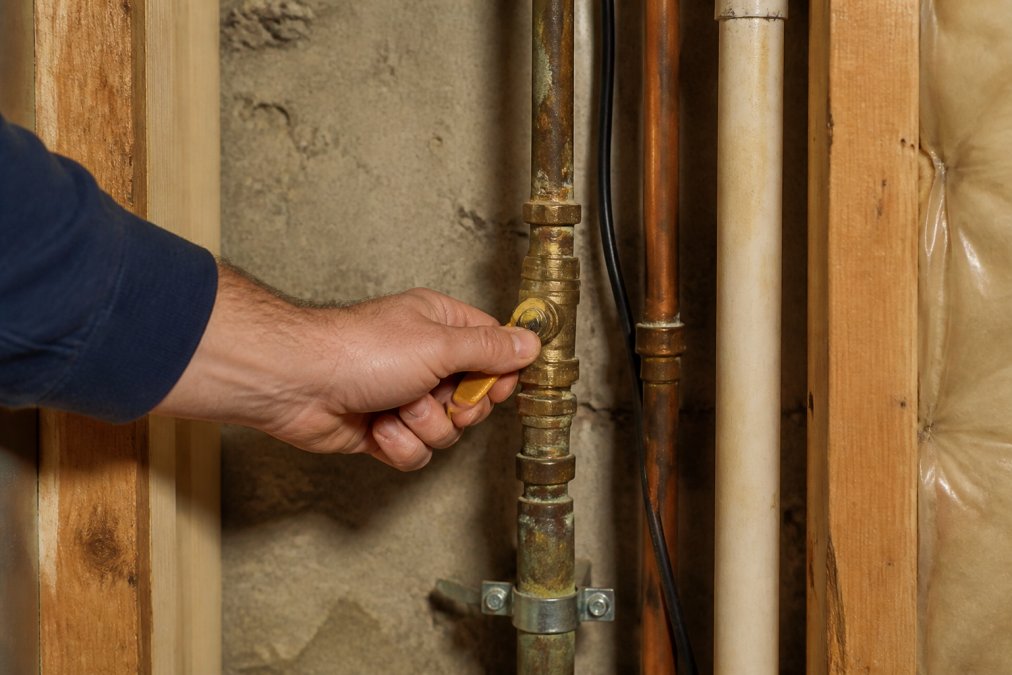
Knowing where this valve is located before an emergency happens is crucial. Walk through your home now and identify it. If you can’t find it, call your water utility or a local plumber during business hours to locate it. That five-minute investment could save thousands in water damage.
Beyond shutting off the water, several immediate actions reduce damage while you wait. Move valuables away from the affected area, furniture, electronics, documents, anything water-sensitive. Wet materials start degrading within hours, so quick removal matters.
Open windows and doors to increase air circulation. If water is pooling, use towels, buckets, or a wet vacuum to remove it. Don’t use a standard vacuum; you’ll damage it. Wet vacuums are designed for this purpose, and many hardware stores rent them inexpensively.
If water is dripping from above, place buckets underneath and move items below the leak.
When you call for emergency service, establish clear communication protocols before the technician arrives. This reduces anxiety and helps you plan your next steps.
What to expect during dispatch:
During the wait:
What to communicate to the technician upon arrival:
Emergency plumbing services cost more than standard repairs because they require technicians to respond outside normal business hours and prioritize your call over scheduled work. For specific pricing on emergency plumbing services, visit the 308 Solutions Group pricing page to see current rates and get a free estimate for your situation.
Speed in emergency plumbing response time directly determines how much damage your home sustains. Water damage escalates exponentially with time. A burst pipe causes minimal damage in the first hour but catastrophic damage within 12 hours if left unaddressed.
Emergency plumbing service prioritizes immediate response and availability outside normal business hours. You can call at 2 AM on a holiday and expect a technician to arrive. Standard service operates during business hours with advance scheduling and lower costs.
An emergency plumbing situation involves active water damage, loss of water supply, or sewage backup. Common examples include burst pipes, major leaks, overflowing toilets, and no hot water when your water heater fails. If water is actively damaging your property or you’ve lost access to essential plumbing, it qualifies as an emergency. Non-emergency issues like slow drains or minor leaks can typically wait for standard business-hour service.
Most emergency plumbing services aim to arrive within 1-2 hours, though this depends on call volume, geographic location, and technician availability. Real-time tracking and communication with dispatch can help you understand your specific arrival window. Calling early when you first notice the problem improves your chances of a faster response.
Response time depends on several factors: time of day (nights and weekends typically have longer waits), your geographic proximity to the service area, current call volume, severity of the issue (critical emergencies may be prioritized), and technician availability. Traffic conditions and distance from the nearest available plumber also affect arrival time. Providing clear details about your emergency when you call helps dispatch assign the right technician and manage expectations accurately.
First, shut off your main water supply to stop active leaks and prevent additional damage. Turn off electricity to affected areas if water is near outlets or appliances. Place towels or buckets under leaks to contain water. Remove valuable items from the affected area. Document damage with photos for insurance purposes. Stay accessible by phone so dispatch can reach you with updates. Avoid attempting major repairs yourself, focus on damage containment until the plumber arrives.
Electrical & Plumbing Licenses:
TECL: 33332 - TSBPE: M-40316