
Last Updated: September 30, 2026
Your water meter is your first line of defense against hidden leaks. It’s the simplest way to find hidden leaks in your home without calling a professional. Most homeowners never look at it until something goes wrong, but a quick inspection can save thousands in water damage and inflated bills.
The water meter measures every gallon flowing through your main water line. When you know how to read it, you can detect leaks that are completely invisible, the ones running inside walls, under slabs, or buried underground.
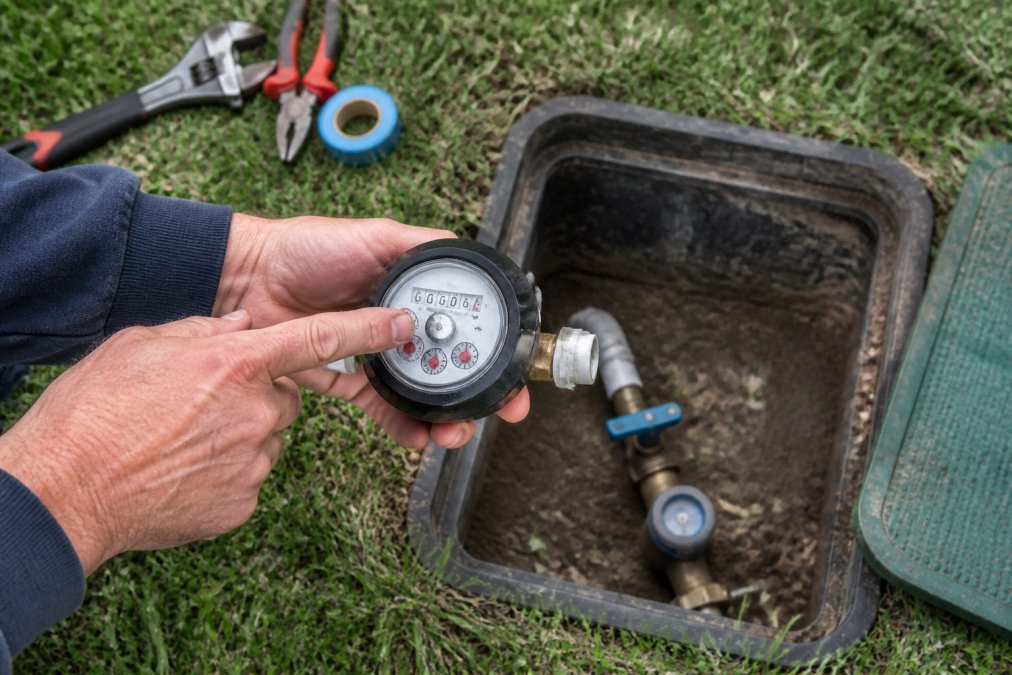
Start by locating your water meter. It’s usually in the front of your home near the street, inside a concrete box marked with a lid. Open the box carefully and look at the dial.
Your water meter displays a series of numbers, similar to a car’s odometer. Write down the current reading. Make sure no one uses water for the next 30 minutes. Check the meter again.
If the numbers changed, you have a leak. Even a small change means water is flowing somewhere when nothing should be running. This is your proof that a hidden leak exists.
The meter also has a small triangle or dial that spins when water flows. Watch this for a few minutes with all fixtures off. If it moves, water is escaping somewhere in your system.
A static pressure test checks whether your supply lines are holding water when they shouldn’t be. You’ll need a simple pressure gauge (available at most hardware stores for under $20).
Turn off your main shut-off valve. Wait 30 minutes. Turn the valve back on and immediately attach the pressure gauge to an outdoor faucet. Record the pressure reading.
Wait another 30 minutes with all fixtures off. Check the pressure again. If it dropped, your pipes are leaking. A significant pressure drop indicates a serious problem that needs immediate attention.
This test pinpoints whether the leak is in your pressurized supply lines or your unpressurized drain system. That distinction matters when you call a professional.
Hidden leaks leave clues. You won’t see water pooling, but you’ll notice other warning signs if you know where to look. Catching these early prevents major structural damage.
Soft spots in your flooring are a red flag. Walk across your kitchen and bathrooms slowly. Press down on the floor with your foot. If any area feels squishy or bounces slightly, water is likely underneath.
Warped wood, buckling drywall, and peeling paint all point to moisture problems. Water damage spreads quickly, so these signs mean the leak has been running for weeks or months.
Mold growth appears as dark spots or fuzzy patches. It thrives in damp environments. If you see mold in a bathroom or basement, moisture is trapped behind walls or under flooring. Mold indicates not just a leak, but one that’s been active long enough to create ideal growing conditions.
Discoloration on ceilings or walls suggests water is dripping from above. Brown stains or rings indicate water has been present repeatedly. Fresh stains mean active leaks. Old stains mean past damage that may have dried out.
Listen for running water sounds when nothing is on. Water flowing through pipes makes a distinct hissing or gurgling noise. If you hear it in walls or under the floor, track where the sound is loudest.
Your water bill tells a story. Compare this month to the same month last year. A sudden jump of 20% or more suggests a leak.
Review your bill for usage patterns. If your winter water consumption is unusually high, suspect toilet leaks or supply line breaks. Toilets are the most common source of hidden household water loss.
Some utility companies provide detailed usage data online. Check it week by week. A consistent pattern of high usage despite no changes in your household habits points to a leak.
Call your water company if you’re unsure. Many provide free leak detection consultations. They can tell you if your usage is abnormal for a home your size.
You don’t need expensive equipment to find many leaks. Several affordable tools work well for DIY detection.
The food coloring test is the easiest way to check toilets for leaks. Toilets account for roughly 30% of household water waste, often silently (the EPA).
Add a few drops of food coloring to the tank (not the bowl). Wait 15 minutes without flushing. If color appears in the bowl, your flapper valve is leaking. This means water is constantly draining from the tank into the bowl.
A leaking toilet flapper wastes hundreds of gallons monthly. The fix is simple: replace the flapper (a $10 part) or the entire tank fill valve. This is the quickest leak fix you can make yourself.
For other fixtures, use the same approach.
A moisture meter measures water content in building materials. Pin-type meters puncture the surface slightly; pinless meters read from above.
When DIY methods don’t locate the leak, professional-grade technology takes over.
Thermal imaging cameras detect temperature differences. Water flowing through pipes or pooling behind walls shows up as cold spots. The camera displays a heat map highlighting these anomalies.
Acoustic leak detectors listen for the sound of escaping water. Pressurized pipes create distinct acoustic signatures when they crack. The detector amplifies these sounds so humans can hear them.
Certain fixtures fail more often than others. Knowing which ones to check first saves time.
Toilets leak silently. The flapper valve in the tank gradually wears out, allowing water to seep into the bowl continuously.
Dishwashers leak at connection points and door seals. Run the dishwasher and watch underneath for water dripping. Check the floor around the unit for soft spots or discoloration.
Knowing when to handle leaks yourself and when to call a professional saves money and prevents costly mistakes.
You can fix toilet leaks yourself. Replacing a flapper or fill valve requires no special tools. These repairs cost under $20 in parts.
Call a professional for leaks you can’t locate. If your water bill is high but you can’t find the source, professionals have tools you don’t.
Leaks don’t occur randomly. Seasonal changes affect your plumbing system predictably.
| Detection Method | Best For | Cost | DIY Difficulty |
|---|---|---|---|
| Water meter check | Confirming leaks exist | Free | Easy |
| Food coloring test | Toilet flapper leaks | $2-5 | Very easy |
| Moisture meter | Finding damp areas | $30-150 | Easy |
| Electronic sensor | Early warning system | $15-30 | Very easy |
| Thermal imaging | Leaks in walls | Professional service | Not DIY |
| Acoustic detection | Underground leaks | Professional service | Not DIY |
Turn off all water-using appliances and fixtures in your home. Read your water meter and wait 30 minutes without using any water. If the meter reading has changed, you have a leak. For a more precise test, note the meter reading before bed and check it first thing in the morning, any difference indicates water loss overnight. This free method confirms whether a hidden leak exists in your plumbing system, though it won’t pinpoint the exact location.
Watch for unexplained increases in your water bill, soft or warped wood on floors and walls, visible water stains on ceilings or walls, musty odors indicating mold growth, and areas of your yard that stay unusually wet or green. You might also hear running water when no fixtures are in use. These signs of a hidden water leak suggest damage behind walls, under floors, or in underground pipes. The sooner you identify these indicators, the less water damage your home will sustain.
Start with free methods: check your water meter and listen for running water sounds. For about $15-$30, purchase electronic water leak detectors to place under sinks and near water heaters. Use food coloring to test toilet tanks for silent leaks, add a few drops and wait 10 minutes; if color enters the bowl without flushing, your flapper is leaking. Moisture meters ($30-$150) help identify damp areas behind walls. These water leak detection tools for homeowners are affordable and effective for surface-level and fixture-specific leaks.
Call a professional if your water meter shows a leak but you cannot find it after checking visible fixtures, if you suspect a slab leak or underground pipe damage, or if water damage is visible inside walls or ceilings. Professionals use thermal imaging, acoustic detection, and pressure testing to locate leaks you cannot find yourself. Professional leak detection is often worth it to avoid expensive exploratory demolition and to prevent further water damage to your home’s structure. Visit our website for current pricing and to book a free estimate.
Electrical & Plumbing Licenses:
TECL: 33332 - TSBPE: M-40316