
Last Updated: November 5, 2026
Quick Summary
You can usually reset a tripped circuit breaker yourself in a few minutes, after unplugging devices on that circuit and pushing the handle fully OFF then ON. If the breaker trips again right away, or shows heat, burning smell, or buzzing, stop and call a licensed electrician rather than resetting it again.
If a circuit breaker has tripped, you can usually restore power yourself in a few minutes. A tripped breaker means the circuit detected an overload, a short, or a ground fault and cut power to protect your wiring. Resetting it is safe when the cause is obvious and the breaker is in good condition.
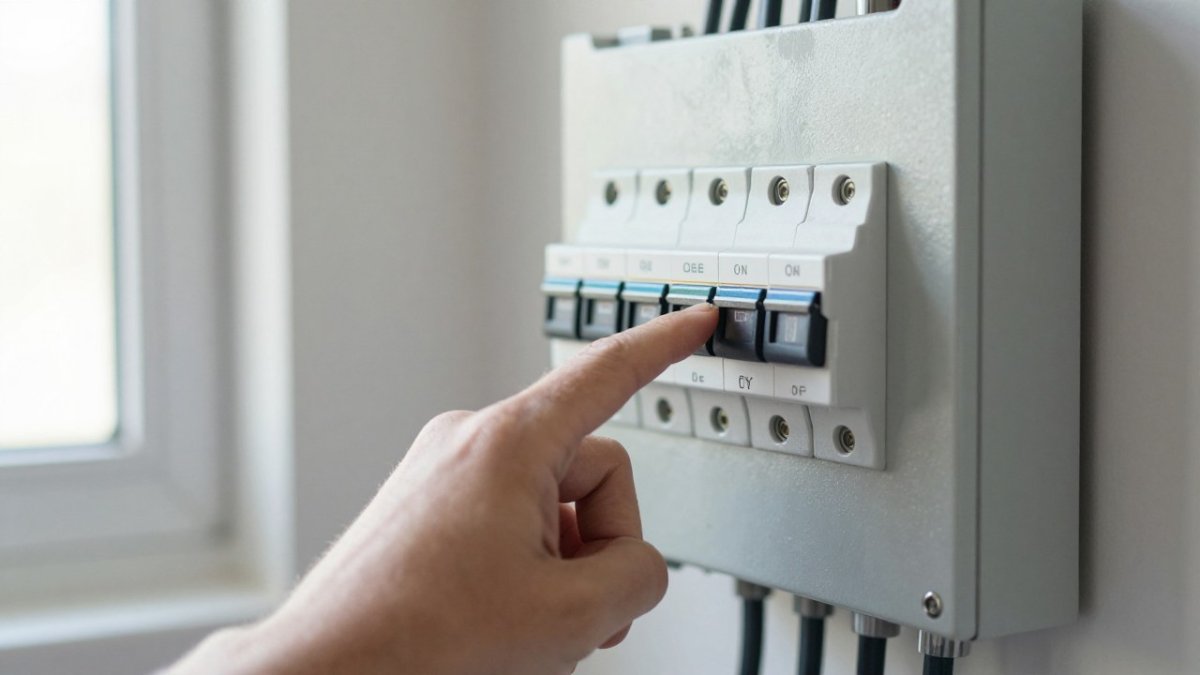
The American Electrical Safety Foundation offers general guidance on residential electrical hazards, and the National Fire Protection Association’s home electrical safety resources explain why tripped breakers should never be bypassed. For the same steps in full detail, see our walkthrough on resetting a tripped circuit breaker safely.
Open the panel door and look for a breaker handle that sits between ON and OFF, or fully in the OFF position. Most tripped breakers rest in the middle, which is the clearest sign of a trip. Some panels also show a small red indicator on the breaker.
Note which rooms or outlets lost power. That tells you which circuit to inspect. Before you reset anything, unplug devices on that circuit, especially space heaters, hair dryers, and microwaves, since they are the most common overload sources.
Push the handle firmly to the OFF position first, then back to ON. A breaker that only moves partway will not hold. Restore power to one device at a time so you can spot the one causing the problem.
Keep these habits in mind:
A breaker that trips repeatedly is telling you something. The most common cause is an overloaded circuit, where too many high-draw appliances share one line. Other causes include a short circuit in a cord or fixture, a ground fault near water, or a failing breaker that trips without a real fault.
A circuit breaker keeps tripping most often because the load exceeds the breaker rating, and the fix is usually to move a device to another circuit. Repeated trips with nothing plugged in point to wiring damage or a bad breaker, and those need a professional.
Watch out: a breaker that is hot to the touch, smells of burning, or buzzes is a serious warning. Shut the circuit off and call an electrician rather than resetting it again.
Most electrical problems that bring a homeowner to a search engine fall into two buckets: a load problem you can isolate yourself, and a fault that needs a licensed electrician. The line between them is narrower than most people assume, so treat the checks below as the full extent of safe homeowner troubleshooting.
A common pattern is a space heater, microwave, or hair dryer sharing a circuit with other loads. Move the high-draw device to a circuit that is not already loaded, and the trips usually stop. If they do not, the problem is in the wiring, not the appliance.
Stop and call a licensed electrician when any of the following is true:
Watch out: the main breaker and the service entrance cables remain energized even when the main breaker is off, so removing the panel cover is not a homeowner task.
A licensed electrician does not just reset the breaker. The diagnostic sequence typically includes a load calculation for the circuit, a voltage drop test under load, a check for shared neutrals and bootleg grounds, a thermal scan of the panel for hot terminations, and a GFCI and AFCI trip test. That is how a recurring trip gets traced to a failing breaker, a damaged conductor, or a circuit that was never sized for today’s loads. If the diagnosis points to the panel itself, the next section covers the warning signs.
The table below summarises when a homeowner can handle a problem and when to call a licensed electrician.
| Situation | Action | Who handles it |
|---|---|---|
| Breaker trips once after plugging in a high-draw device | Unplug devices, reset once, move device to another circuit | Homeowner |
| Breaker trips immediately with nothing plugged in | Stop and call a licensed electrician | Electrician |
| GFCI will not reset | Stop; do not bypass | Electrician |
| Outlet or switch plate is warm or scorched | Stop and call a licensed electrician | Electrician |
| Burning smell, smoke, buzzing or crackling | Stop and call a licensed electrician | Electrician |
| Panel cover needs removing beyond breaker row | Do not remove; call a professional | Electrician |
An aging panel can cause more trips and create real fire risk. Watch for breakers that feel loose, panels with a brand known for breaker failures, rust or scorch marks inside the cabinet, and a service that cannot handle modern loads like central air or an EV charger.
A panel with frequent trips, no open slots, or signs of heat damage warrants an inspection. The U.S. Consumer Product Safety Commission’s electrical safety guidance also recommends that homeowners report any burning smells or sparking outlets right away.
A panel upgrade is often triggered by measurable conditions rather than opinion. The clearest signals are a service that cannot carry the load, a panel with known failure modes, or a project that needs circuits the panel cannot supply.
A typical upgrade replaces the main panel with a higher-amperage unit, replaces the main breaker, updates the grounding and bonding, and adds open slots for future circuits. The service entrance conductors and meter base may also need replacement, and that work usually requires coordination with the utility.
Panel replacement typically requires a permit, and the inspection verifies grounding, bonding, breaker sizing, and conductor ampacity against the adopted electrical code. Ask any contractor whether the permit will be pulled in their name and whether the inspection is included in the written estimate. A quote that skips the permit is not a cheaper quote; it is an incomplete one.
The cost of an upgrade depends on several factors rather than a single flat rate: the amperage of the new service, whether the service entrance and meter base are replaced, the distance and routing of new conductors, whether the panel is indoors or outdoors, whether drywall or siding must be opened, and whether the utility requires a service upgrade on its side. Get a written estimate that lists each of those items separately so you can compare bids on scope, not just on the bottom line.
Ask every bidder for the same four things: the amperage and panel model being installed, whether the permit and inspection are included, what happens if the utility requires additional work, and the warranty on labor and on the panel itself. A bid that is silent on any of those is not comparable to one that addresses them. For the panel-specific scope, our electrical panel upgrades service covers replacement and capacity increases, and our guide to electrical panel replacement walks through the warning signs in more detail.
If you have repeated trips, warm outlets, or an older panel, a home electrical safety inspection gives you a clear picture of what needs fixing. A licensed electrician checks the panel, grounding, outlets, and major circuits, then explains what is urgent and what can wait.
308 Solutions Group provides expert electrical services for residential and commercial properties, with more than 45 years of experience and 24/7 emergency support. Our team can assess your panel and explain your options. You can book an electrical inspection online to request an appointment for your property.
For the panel-specific work itself, our electrical panel upgrades service covers replacement and capacity increases. If you want a professional to diagnose a recurring problem, our electrical troubleshooting service is the right starting point, and you can also review the warning signs in our guide to electrical panel replacement.
Turn off or unplug everything on the affected circuit first, then switch the breaker fully to OFF before pushing it firmly to ON. Breakers that trip repeatedly, feel hot, smell burnt, or won’t stay on should not be reset again. Those signs point to an overload, a short, or a failing breaker, and a licensed electrician should inspect the circuit before you try again.
Call a licensed electrician if a circuit trips more than once after you have unplugged the loads, if the breaker is warm to the touch, or if you notice scorched outlets, flickering lights, or buzzing from the panel. Persistent tripping usually means a wiring fault, a ground fault, or an overloaded circuit that needs correction rather than another reset.
Common signs include frequent breaker trips, fuses or breakers that run warm, dimming lights when large appliances start, a panel that has no room for new circuits, and a service rating too small for modern loads such as EV chargers or central air. A licensed electrician can run a load calculation and tell you whether a 200-amp service upgrade or a panel replacement is needed.
Yes, especially for homes with older wiring, a panel more than 25 years old, or recent DIY work. An inspection checks the panel, grounding, GFCI and AFCI protection, and signs of overheating. Ask for a written report with prioritized repairs, so you can decide what is urgent and what can wait.
Electrical & Plumbing Licenses:
TECL: 33332 - TSBPE: M-40316
