
Last Updated: September 19, 2026
A breaker that trips once a year is normal. A breaker that trips every week is telling you something is wrong. This is one of the clearest signs my electrical panel needs replacement, and it is the one homeowners most often ignore.
Circuit breaker tripping happens when the breaker cuts power to protect your wiring from overheating. That is its job. But constant tripping means your system is under stress it was never built to handle.
A circuit breaker is a safety switch inside your service panel. It shuts off power when the current gets too high.
When it trips, one of two things is happening:
The first is a load problem. The second is a panel problem. Both matter, but only one means you need a new panel.
An overloaded circuit breaker trips because too many devices share one circuit. Unplug a few things and it stops. That is a usage fix.
A failing panel trips even when the load is light. That is a hardware problem.
Here is how to tell them apart:
| Signal | Overloaded Circuit | Failing Panel |
|---|---|---|
| Trips when | Many devices run at once | Randomly, any time |
| Reset works | Yes, for a while | Yes, but trips again fast |
| Breaker feel | Cool | Warm or hot to touch |
| Affected area | One circuit | Multiple circuits |
Lights that dim when the AC kicks on are a classic warning sign. They mean your panel cannot keep steady voltage across the whole house.
Older panels were built for a time when homes had far fewer appliances. Now every room has electronics, and the load adds up fast.
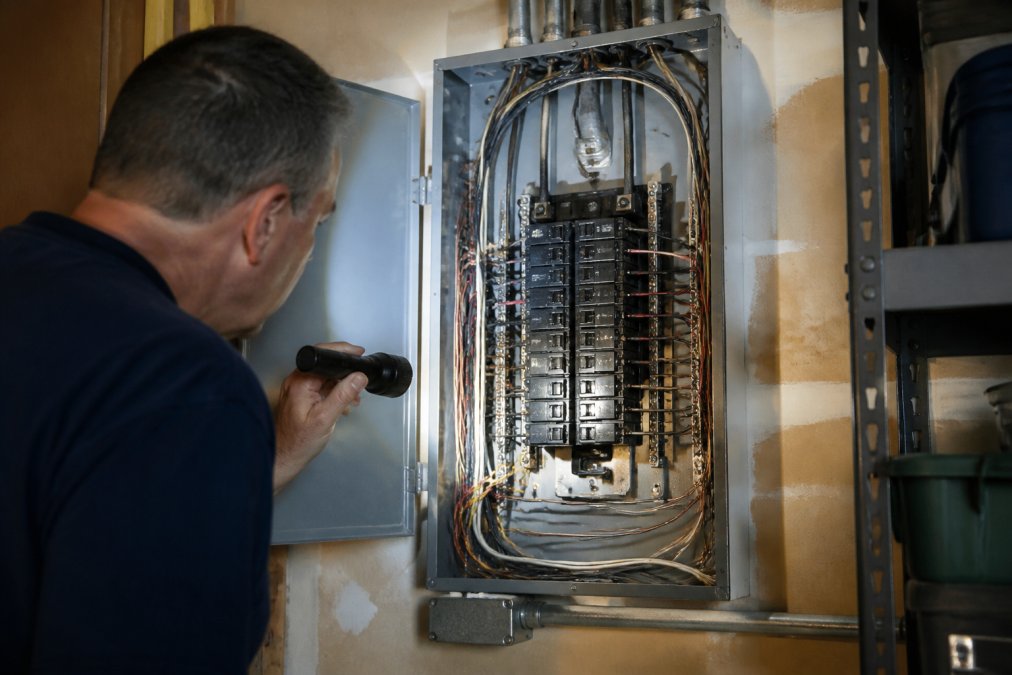
A buzzing sound from the panel is never normal. Neither is crackling.
Both point to loose connections or failing breakers. A burnt odor is the most urgent sign of all. It means heat is already damaging components inside the breaker box.
If you smell burning near your panel, leave the area and call a licensed electrician. Do not wait.
Open the panel door and look closely. You may see:
Moisture and age cause rust. Heat causes scorching. Both mean the panel is failing.
Most electrical panel lifespan estimates land between 25 and 40 years. Past that window, parts wear out even if nothing looks wrong.
Age alone is not a reason to replace a panel. Age plus any other warning sign is.
Older panels from certain brands have known safety issues. Fuse boxes are the biggest concern. If your home still runs on fuses instead of breakers, an upgrade is overdue.
Many panels in DFW homes are well past their service life. Many still “work.” That does not mean they are safe.
A panel with no open slots cannot grow with your home. That is a hard limit.
You will notice this when you try to add:
When every slot is full, the only fix is a larger panel.
Fuses create a different problem. Fuse boxes were common before breakers became standard. They offer less protection and are harder to maintain. Many insurers now ask about them directly.
Amperage is the total current your panel can handle. Most older homes have 100-amp service. Many newer homes need 200 amps or more.
Here is the calculation most homeowners never run:
If your total load sits near your panel’s limit, you have no headroom. Adding anything new pushes you over.
Common loads to count:
A 100-amp panel running an EV charger, AC, and range at once is already at its edge. A 200-amp panel gives you room to grow.
The average cost to replace electrical panel varies widely by home and scope. Pricing depends on panel size, wiring condition, permit fees, and whether the meter base needs work.
Because every home is different, we quote each job after a free estimate. You can check current pricing on our website.
What drives the price up:
What keeps it lower:
Panel replacement is not a DIY job. It involves live voltage, grounding, and electrical code rules that vary by area. Mistakes here are dangerous and often invisible until something fails.
There are two more angles most guides skip.
Insurance and resale: Many insurers ask about panel age and type. Some won’t cover homes with fuse boxes or known problem panels. Buyers ask the same questions during inspection. A new panel can protect both your coverage and your sale.
Smart panel integration: Newer panels can track usage per circuit and send alerts before a breaker fails. If you are upgrading anyway, this is worth asking about.
For DFW homeowners, 308 Solutions Group handles panel upgrades, surge protection, and generator installs with 24/7 emergency support. We have served residential and commercial properties for over 45 years.
The average cost to replace an electrical panel depends on amperage, labor, permits, and whether wiring upgrades are needed. A straightforward 200-amp swap costs less than one requiring a service mast replacement or new circuits. Because pricing varies by scope, 308 Solutions Group provides free estimates before any work begins, so you know the full number upfront.
Most electrical panel lifespan estimates land between 25 and 40 years, though heat, corrosion, and repeated overloads shorten that window. Panels from brands discontinued after safety recalls should be replaced regardless of age. If yours is past 25 years old and showing any warning signs, have a licensed electrician inspect it before small issues become fire risks.
The 80% rule means a circuit should carry no more than 80% of its rated amperage continuously. A 200-amp panel comfortably handles about 160 amps of sustained load. Modern homes with EV chargers, heat pumps, and induction ranges often exceed that threshold, which is why amperage capacity calculations matter before adding new circuits.
Yes. Scorched outlets, burning odors, rust, and buzzing sounds point to loose connections or failing breakers that generate heat. Federal Pacific and Zinsco panels are known fire hazards. If you notice any of these signs, stop using the affected circuits and call a licensed electrician for an immediate inspection.
An aging panel rarely fails without warning. It trips, buzzes, dims, and rusts first. If you have noticed any of these signs, do not wait for a full failure. 308 Solutions Group offers free estimates, 45+ years of experience, and 24/7 emergency service for panel upgrades and electrical repairs across the Dallas-Fort Worth area. Get started with 308 Solutions Group and restore safe, reliable power to your home.
Electrical & Plumbing Licenses:
TECL: 33332 - TSBPE: M-40316