What Is an Electrical Inspection and Why It Matters
An electrical inspection is a thorough examination of your home’s electrical system by a qualified professional, checking everything from your service panel to individual outlets for safety hazards, code violations, and potential problems.
Most homeowners don’t think about their electrical systems until something breaks, but an electrical inspection catches problems before they become dangerous or expensive.
Faulty wiring, overloaded circuits, and outdated equipment cause thousands of house fires every year, and an electrical inspection identifies these risks so you can fix them.
Core Components of an Electrical Inspection
A complete electrical inspection examines multiple systems, each playing a specific role in keeping your home safe and functional.
Electrical Panel and Breaker Box Assessment
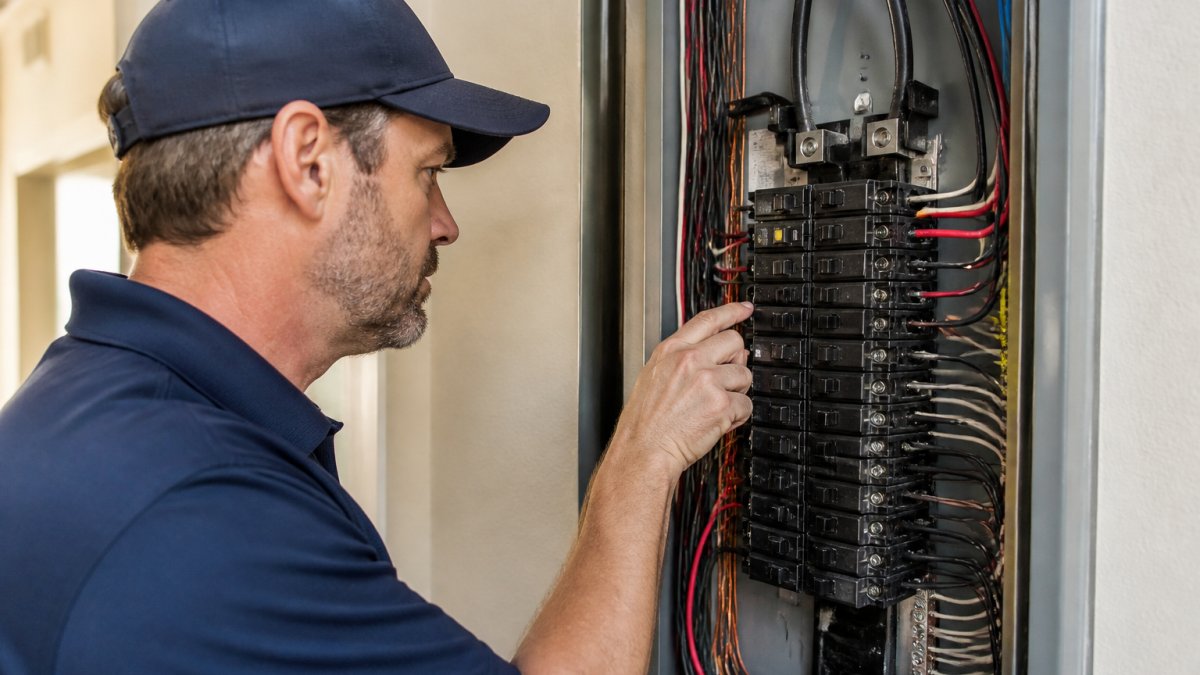
Your electrical panel receives power from the utility company and distributes it via individual circuits. During an inspection, the electrician checks it for proper labeling, signs of overheating, corrosion, and correct breaker sizing.
Common issues found in panels include:
Missing knockouts or cover plates
Rust or water damage inside the box
Breakers that don’t trip when tested
Improper grounding connections
Professional electrician examining interior of open electrical panel showing circuit breakers, wiring connections, and labeling system in well-lit residential setting
Wiring Condition and Connection Evaluation
The inspector examines visible wiring for damage, improper installation, and code violations, checking how wires are routed, supported, and protected.
Wiring type matters too. Older homes may have aluminum, knob-and-tube, or cloth-insulated wiring, outdated methods that pose fire and safety risks. Modern homes use copper wiring with plastic insulation.
The inspector checks all visible connections are tight, since loose connections generate heat and can start fires.
Outlets, Switches, and Electrical Devices
Every outlet and switch gets tested during an electrical inspection.
The inspector looks for outlets too close to water, cracked or damaged outlets, switches that don’t control the right fixtures, missing cover plates, and outlets installed at incorrect heights.
Outdated two-prong outlets without grounding are noted. Outlets in kitchens, bathrooms, and outdoor areas should have GFCI protection, which the inspector verifies.
Grounding, Bonding, and GFCI Protection
Grounding is your safety system’s foundation, providing a safe path for electrical current to return to the earth if something goes wrong.
GFCI outlets shut off power in milliseconds if they detect a ground fault, and are required in bathrooms, kitchens, garages, and outdoor areas.
The inspector also verifies your home’s bonding system is complete. Metal water pipes, gas pipes, and other conductive materials should be bonded to the grounding system to prevent dangerous voltage differences.
Home Electrical Inspection Checklist
Use this checklist to understand what a professional inspector evaluates:
Overloaded circuits with multiple power strips and extension cords
Damaged or deteriorated wiring insulation
Outlets or switches that are hot to the touch
Burning smells coming from outlets or the electrical panel
Shock Hazards
Missing or damaged outlet cover plates
Outlets without proper grounding
GFCI outlets that don’t function properly
Wet areas without GFCI protection
System Failures
Breakers that trip frequently
Flickering lights or dimming when appliances run
Buzzing or crackling sounds from outlets
Outlets that don’t work or work intermittently
When an inspector finds these issues, they’ll document them in a detailed report prioritized by severity. Life-threatening hazards should be fixed immediately; less urgent issues can be scheduled within weeks or months.
How Long Does an Electrical Inspection Take
Duration and cost depend on the scope of the inspection, not just home size. A quick safety walkthrough and a full pre-purchase evaluation take different amounts of time.
Typical Time Ranges
Condominium or small home (under 1,200 sq ft), single panel: roughly 45 minutes to 1.5 hours.
Average single-family home (1,200-2,500 sq ft), one panel: about 1.5 to 3 hours.
Larger home (2,500+ sq ft), multiple panels, outbuildings, or a pool: 3 to 5 hours, sometimes split across two visits.
Pre-purchase inspection as part of a full home inspection: the electrical portion is usually 30 to 60 minutes of a longer visit.
What Drives the Time Up or Down
Number of panels and subpanels. Each one adds a full evaluation cycle.
Age and wiring method. Knob-and-tube, aluminum branch wiring, or cloth-insulated conductors take longer because the inspector is looking for specific failure patterns.
Accessibility. A panel behind stored boxes, a crawlspace with limited clearance, or an attic with no walkway all add time.
Number of devices. Testing every accessible receptacle and switch is the slowest part of the visit.
What It Typically Costs
Pricing varies widely by market and scope, but generally falls into three buckets:
Add-on to a full home inspection: often a modest line item, since the inspector is already on site.
Standalone general electrical inspection: priced for a typical single-family home.
Specialty evaluations (older wiring, insurance-required reports, multi-panel properties): priced higher because of the additional time and documentation.
Pro Tip Ask for a written scope before you book. Two quotes that look similar on price can cover very different amounts of work, one may test every receptacle, the other may only spot-check.
What Happens Before, During, and After
Before the visit:
Clear access to the panel, subpanels, and any attic or crawlspace hatches.
Make a list of symptoms you have noticed (flickering, warm outlets, tripping breakers).
Gather any permits, prior inspection reports, or records of electrical work.
Secure pets and unlock gates to outdoor equipment.
During the visit:
The inspector opens the panel cover and evaluates the bus, breakers, and terminations.
They walk the home testing receptacles, switches, and GFCI/AFCI devices.
They inspect visible wiring in accessible areas, attic, basement, garage, and exterior.
They verify grounding and bonding at the service and at metal piping.
After the visit:
You receive a written report, usually the same day or within a few business days.
The report lists findings by priority with recommended actions.
You can schedule a follow-up call to walk through anything unclear.
Key Takeaway Budget the visit as a half-day event for an average home. The physical inspection is only part of it, the report and the follow-up questions are where the value gets delivered.
How to Prepare for an Electrical Inspection
Preparing your home helps the inspector work efficiently. Clear the area around your electrical panel, removing boxes, stored items, and clutter from the panel closet or basement area.
Make a list of any electrical problems you’ve noticed:
Outlets that don’t work
Switches that stick or don’t control fixtures
Flickering lights
Burning smells
Have your home’s electrical history available if you have it, previous inspection reports, permits, and records of repairs or upgrades help the inspector understand the system’s evolution.
Turn off any security systems that might interfere with the inspection, and inform the inspector about any recent electrical work or upgrades.
What Inspectors Cannot Assess and Next Steps
A professional electrical inspection is a visual, non-invasive evaluation. Understanding its limits sets realistic expectations for the report.
What a Visual Inspection Cannot Assess
Most inspectors evaluate only what is accessible and visible, so the following are typically outside the scope of a standard inspection:
Concealed wiring inside finished walls, ceilings, and floors. An inspector cannot confirm whether the insulation on a wire behind drywall is brittle, nicked, or overheated. They can only infer risk from what the circuit does at the panel and at the devices.
Underground service laterals and buried conduit. The condition of the utility feed below grade is generally the utility’s responsibility and is not excavated or tested during a routine inspection.
The interior condition of the panel bus and breaker internals. Inspectors can look for heat discoloration, double-taps, and improper breaker types, but they do not disassemble breakers or perform load-bank testing.
Wire behind insulation, in sealed chases, or under attic decking. If it is not reachable without destructive access, it is not evaluated.
Watch Out A clean inspection report is not a guarantee that hidden wiring is defect-free. It is a snapshot of accessible conditions on the day of the visit.
How Findings Are Prioritized in the Report
A useful inspection report doesn’t just list problems, it ranks them into three tiers:
Immediate hazards. Conditions that present a shock or fire risk right now: exposed live conductors, a scorched panel bus, a missing main bonding jumper, a GFCI that will not trip, or a breaker that will not reset. These should be addressed before the circuit is used again.
Recommended repairs and upgrades. Items that are not an emergency but will degrade safety or reliability over time: ungrounded three-prong outlets, missing cover plates in damp areas, an overloaded panel with no spare capacity, or aging two-prong receptacles in bedrooms.
Maintenance and monitoring notes. Observations worth tracking: a panel that is at capacity for future additions, a surge protector nearing end of life, or labeling that should be updated.
A well-written report pairs each finding with a location, a photograph where possible, a plain-language explanation of why it matters, and a recommended action, so a homeowner can hand it to a licensed electrician and get comparable quotes.
Your Next Steps After the Inspection
Read the report the same day. Questions are easiest to answer while the visit is fresh.
Separate the tiers. Fix tier-one hazards immediately, schedule tier-two repairs within weeks, and put tier-three items on a maintenance calendar.
Get at least two quotes for anything beyond a minor repair. Ask each electrician to reference the specific finding so you compare the same scope.
Keep the report. It becomes a baseline for the next inspection and a useful document if you sell.
Do not treat the report as a punch list to DIY. Panel work, grounding, and bonding typically require a licensed electrician and, in many cases, a permit.
Key Takeaway The value of an inspection is not the list of problems, it is the prioritization. A report that tells you what to fix first, and why, is worth more than one that simply catalogs defects.
Frequently Asked Questions
What does an electrician check during a home electrical inspection?
A professional electrician examines your electrical panel, circuit breakers, wiring condition and connections, outlets and switches, grounding and bonding systems, GFCI protection, and the electrical meter. They visually inspect for fire hazards, shock risks, code violations, and damaged or outdated components. The inspection also identifies overloaded circuits, faulty breakers, and safety issues that require repair or replacement.
What are the biggest red flags during an electrical inspection?
Critical red flags include outdated wiring (knob-and-tube or aluminum), missing or tripped breakers, evidence of burning or scorch marks, exposed wiring, improper grounding, missing GFCI outlets in wet areas, overloaded circuits, and faulty connections. These hazards create fire and shock risks and must be addressed immediately to protect your home and family.
How should I prepare for an electrical inspection?
Clear access to your electrical panel and meter by removing obstacles or storage items. Ensure the main breaker area is accessible and well-lit. Make a list of any electrical concerns or malfunctions you’ve noticed. Turn off major appliances to reduce circuit load during the inspection. Have documentation of any previous electrical work or repairs available. Inform the inspector of any recent electrical issues or safety concerns.
How often should a home have an electrical safety inspection?
The National Electrical Code recommends a professional electrical inspection when purchasing a home, after major renovations, or every 3-5 years for older homes. Homes built before 1970 may need more frequent inspections due to outdated wiring. If you experience frequent circuit breaker trips, flickering lights, or burning smells, schedule an inspection immediately rather than waiting for a routine cycle.