
Last Updated: October 12, 2026
Plumbing problems rarely announce themselves during business hours. A pipe bursts at midnight. A drain backs up on a Saturday.
Most homeowners expect a simple diagnosis and a straightforward bill.
The core issue isn’t that plumbers are dishonest. It’s that most homeowners don’t know what to ask before work starts.
Homeowners can be blindsided by bills because they skipped these steps. The good news: a few questions up front and a clear approval process eliminate almost all surprises.
Never hire a plumber without a written estimate in hand. A verbal estimate or “we’ll call you with the price” creates room for misunderstanding and hidden costs.
A written estimate gives you three things: clarity on what the plumber will do, a price commitment, and protection if charges increase. It’s also the foundation for comparing quotes fairly.
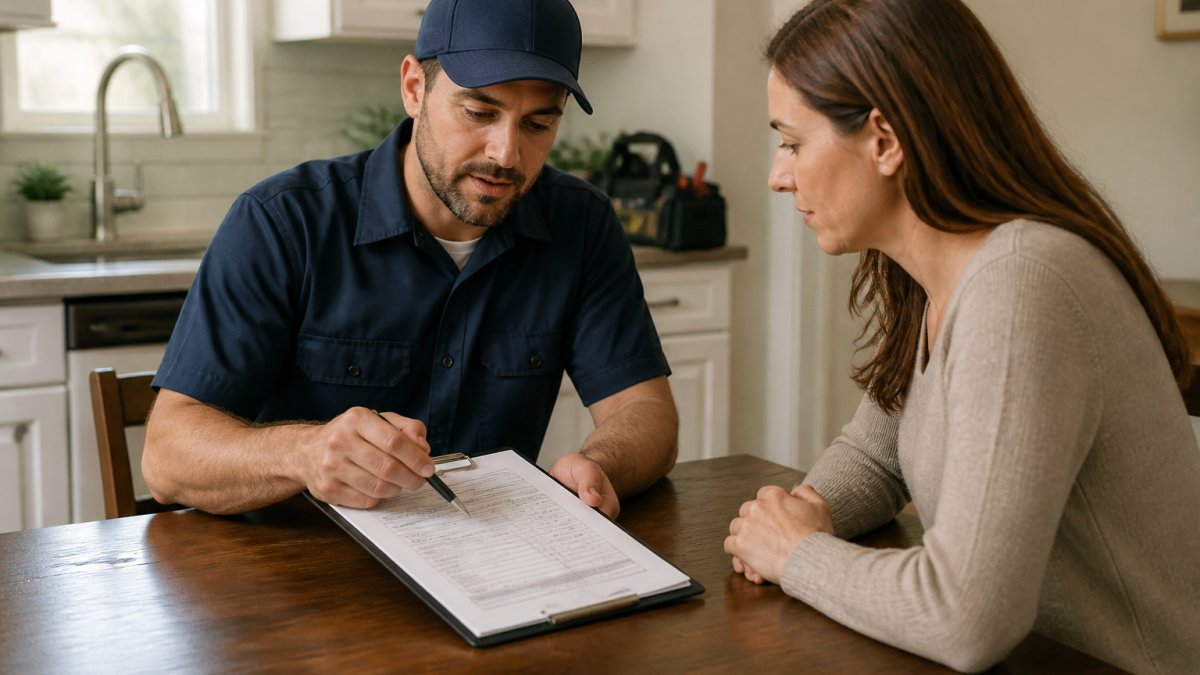
A solid estimate covers the specific work and all associated costs, answering every question a homeowner might have before signing.
Your estimate needs:
Don’t accept an estimate that lumps everything into vague categories like “labor and materials.” You need line-item detail. If the estimate says “repair drain system, $500,” ask for a breakdown. What parts? How many hours of labor? What’s included in that price?
Some plumbers deliberately keep estimates fuzzy. Others are just disorganized. Either way, vague wording creates room for surprise charges later.
Watch for these warning signs:
If an estimate is vague, ask the plumber to clarify before they start. A professional will happily provide detail; if they resist or get defensive, call someone else.
The estimate is your starting point. Your questions fill in the gaps and protect you from surprises.
Ask these questions before you commit:
Many plumbers charge a service call fee just to come out and assess the problem. What matters is knowing the fee upfront and what it covers.
A service call fee varies by location and whether you’re calling during regular or after-hours. Some apply it toward the repair cost if you hire them; others keep it separate.
A diagnostic fee, sometimes bundled with the service call, is the cost to identify what’s wrong. Once the plumber knows the problem, they’ll estimate the repair.
Confusion arises when plumbers don’t explain this upfront. Always ask: “What’s your service call fee? Does it apply to the repair cost if I hire you?”
Labor is the biggest component of most plumbing bills. Understanding how you’re being charged, by the hour or by the job, makes a huge difference.
Hourly rates mean the plumber charges a set amount per hour.
Flat-rate pricing means one price for the entire job regardless of duration.
Ask your plumber: “Are you charging hourly or flat-rate? If hourly, what happens if the work takes longer than your estimate?” Get it in writing.
Surprise charges often come from fees homeowners didn’t know existed. Understanding them lets you ask before work starts.
Calling a plumber at 2 AM on a Sunday costs more than at 9 AM on a Tuesday, which is reasonable since they’re working outside normal hours.
Emergency fees vary widely: some add 50% to their normal rate for after-hours work, others charge a flat emergency fee on top of the repair cost, and a few include after-hours service in standard pricing.
Before calling an emergency plumber, ask about after-hours rates. Facing a burst pipe at midnight you may not have a choice, but at least you’ll know what to expect on the bill.
Some plumbers charge a dispatch fee just to send a technician, covering administrative costs and fuel. Others build it into their service call fee or hourly rate. It varies by company.
Travel charges are sometimes separate from dispatch fees. If your home is far from the plumber’s office, they might add a travel fee. This should be disclosed upfront.
Ask: “Do you charge a dispatch fee? Is there a travel charge based on distance?” If yes, ask how much.
Once work starts, reality sometimes differs from the estimate. The plumber opens a wall and finds corroded pipes, or a simple drain cleaning uncovers a bigger blockage. The scope expands.
This is where a change order comes in: a written document describing the additional work and its cost, requiring your approval before the plumber proceeds.
Here’s how it should work:
This protects both of you: you know exactly what you’re approving and its cost, and the plumber has authorization before spending more time and money.
Sometimes a bill arrives significantly higher than the estimate. Maybe the plumber found extra work without proper approval, added unmentioned fees, or the invoice is just wrong.
Don’t pay immediately. Review the invoice carefully against your estimate.
Many disputes resolve with a simple conversation. The plumber may have made an error or failed to communicate a change. A professional will work with you to clarify.
State and local laws provide some protection against unfair billing practices. While specifics vary by jurisdiction, common protections include:
If a plumber refuses to justify charges or work with you on a dispute, you have options:
Document everything: your estimate, change order approvals, invoice, and all communications with the plumber. This paper trail is crucial if you need to escalate a dispute.
One estimate isn’t enough. Get at least two or three to understand the market and spot outliers.
When comparing quotes, make sure you’re comparing apples to apples:
Don’t automatically choose the cheapest quote. An unusually low estimate might mean the plumber underestimated the work or plans to cut corners.
Look for consistency. If two plumbers quote $800 and one quotes $2,500, ask the high bidder to explain.
| Step | What to Do | Why It Matters |
|---|---|---|
| Get written estimate | Request detailed breakdown of labor, parts, and fees | Protects you from vague pricing |
| Ask key questions | Clarify service fees, hourly rates, and change order process | Prevents misunderstandings mid-job |
| Spot red flags | Watch for vague language and missing details | Signals potential for surprise charges |
| Get multiple quotes | Compare at least 2-3 estimates for the same work | Identifies fair pricing and outliers |
| Approve changes in writing | Use a change order for any scope expansion | Prevents unauthorized work and charges |
| Review the invoice | Check every line item against the estimate | Catches errors and unauthorized charges |
Surprise plumbing charges happen when homeowners skip the basics: getting a written estimate, asking the right questions, and approving changes in writing.
At 308 Solutions Group, we believe in transparent pricing and clear communication.
Ask for a written estimate that breaks down labor, parts, and any service or diagnostic fees. Clarify the hourly rate or flat fee, how long the job should take, and whether the estimate includes all materials. Ask if additional charges might arise and request authorization before any work beyond the original scope begins. Confirm emergency surcharges if applicable and get the total expected cost in writing before the plumber starts.
A complete estimate lists labor costs, parts and materials with descriptions, dispatch or service call fees, diagnostic fees if charged separately, and any applicable emergency or after-hours surcharges. It should specify the scope of work, timeline, and warranty. Ask the plumber directly if there are any other fees not listed. If the estimate is vague or uses phrases like ‘and other charges as needed,’ request itemization before work begins.
Request a detailed invoice showing what work was performed and why costs increased. Review it against the original estimate. If additional work was discovered during the job, ask for the written change order you should have approved before that work started. If charges seem unjustified, contact the plumber in writing to dispute the bill. Most states allow consumers to withhold payment for work not authorized in advance. Document everything and consider filing a complaint with your state’s licensing board if the plumber refuses to justify the overcharge.
Yes, emergency and after-hours calls typically include surcharges, often 50% to 100% above standard rates depending on the time and day. This is legal and standard practice. However, the plumber must disclose this fee before the appointment or in writing when they arrive. Ask about emergency rates when you call, and confirm the surcharge amount in writing or get it stated clearly on the estimate so there is no surprise when the invoice arrives.
Electrical & Plumbing Licenses:
TECL: 33332 - TSBPE: M-40316