
Last Updated: September 16, 2026
A leaking water heater is a plumbing emergency, and the first five minutes matter more than the next five hours. According to the U.S. Department of Energy’s water heating guidance, water heating is the second-largest energy expense in most homes, which means the equipment deserves immediate attention when it fails. This guide from 308 Solutions Group walks through exactly what to do when you find your water heater leaking, from emergency shut-off to the repair-or-replace decision.
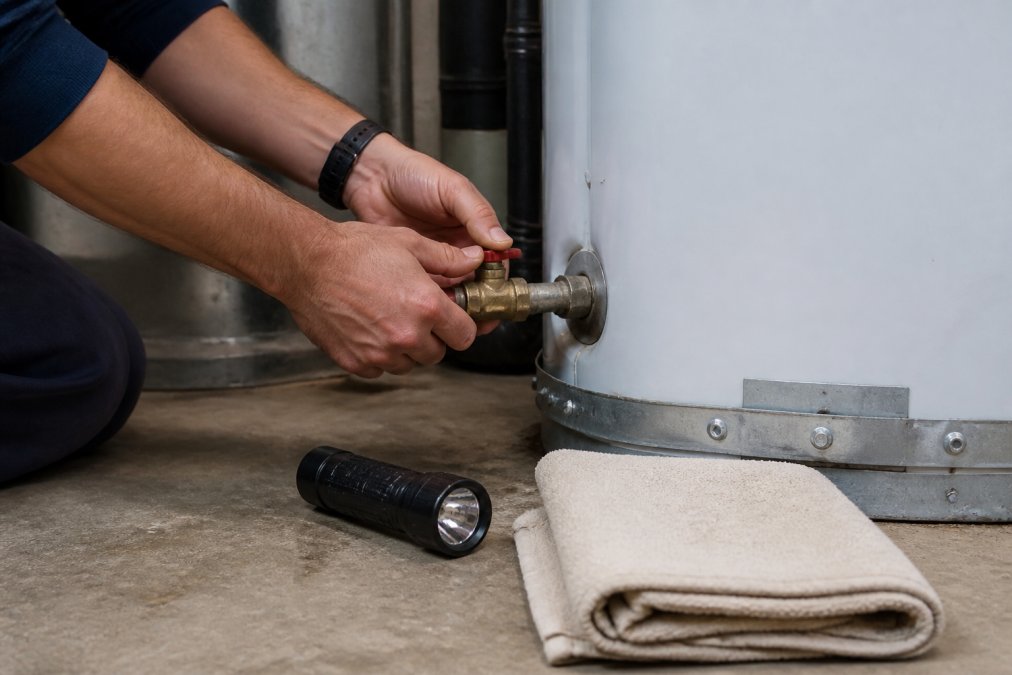
Cut the power or gas first, then close the cold water inlet valve on top of the tank. On a gas unit, turn the dial to “pilot” or “off.” On an electric unit, trip the breaker at the panel. Skipping the power step risks electrocution or a gas hazard while you work.
Contain the water before it reaches drywall, baseboards, or flooring. A drip pan under the tank helps, but most pans overflow quickly once a tank fails.
Leaking from the bottom of the tank is the most serious symptom, because it usually points to the tank itself rather than a fitting. A water heater leaking from bottom often means internal corrosion has eaten through the steel shell, and that is not a repairable condition.
Minerals in the water supply settle on the tank floor and create a layer of sediment. That layer traps heat, overheats the steel, and accelerates corrosion. An anode rod is designed to sacrifice itself to protect the tank lining, but once the rod is consumed, the tank begins to fail. A leaking tank bottom almost always signals the end of the unit’s service life.
Not every bottom leak is tank failure. A loose drain valve, a worn gasket, or a failing temperature and pressure relief valve can drip down the side of the tank and pool underneath, mimicking a tank leak. Tighten the drain valve by hand and check the T&P valve discharge tube for seepage before assuming the worst.
A water heater pressure relief valve leaking is a warning, not a nuisance. The temperature and pressure relief valve opens when internal pressure or temperature climbs too high, and a valve that drips continuously means something is driving that pressure up.
Draining the tank is sometimes worth doing, but only when the leak traces to a drain valve, a sediment-clogged fitting, or a T&P valve that is weeping because of thermal expansion. It will not fix a corroded tank, and it will not fix a cracked fitting. Before you spend an hour on a hose and a bucket, confirm the leak source.
If the tank is past its typical 8- to 12-year lifespan, if the water is rusty or metallic-tasting, or if the leak is at the tank shell rather than a valve, draining is a temporary measure at best. In those cases, the money you spend on a service call is better put toward replacement. A qualified plumber can confirm tank integrity in a few minutes and give you a straight answer before you commit to either path.
Condensation is a common false alarm, especially on gas units in humid climates. Cold water entering a warm tank during cooler months can cause moisture to bead on the exterior, and that moisture drips down and pools under the unit.
| Sign | Condensation | Real Leak |
|---|---|---|
| Timing | Only after heavy hot water use | Constant, even when idle |
| Location | Tank exterior, fittings | Bottom seam or valve |
| Volume | Light moisture, dries | Steady drip or puddle |
| Smell | None | Rusty or metallic |
The repair-versus-replace decision comes down to three things: where the leak is coming from, how old the tank is, and what the repair costs compared to a new unit. Most homeowners facing a leaking water heater are anxious about cost, so here is a realistic framework.
Repair costs vary by market and by the specific part.
A new tank-style water heater, installed, depends on tank size, fuel type, venting requirements, code upgrades, and whether the old unit needs to be hauled away.
A simple rule most plumbers use: if the repair costs more than half the price of a new installed unit, and the tank is more than halfway through its expected lifespan, replace it. If the tank is young and the leak is at a valve, fitting, or T&P relief valve, repair it.
Signs your water heater is failing beyond the leak:
For a repair-versus-replace call, a qualified plumber can inspect tank integrity, check the anode rod, and give you a straight answer. 308 Solutions Group provides free estimates, so you know the number before any work begins. If you are weighing options, the U.S. Department of Energy’s guidance on selecting a new water heater is a useful reference for sizing and efficiency ratings before you commit to a replacement.
A leaking water heater is stressful, but the response is straightforward: shut off the utilities, contain the water, and diagnose the source. Whether it is a faulty T&P relief valve, a worn drain valve, or a tank that has finally corroded through, fast action protects your home and your wallet.
No. If you see water pooling around the tank, turn off the power (gas valve or electrical breaker) and the cold water inlet immediately. Using a leaking water heater risks electrical shock, gas hazards, and further water damage. Call a licensed plumber to diagnose the issue before restoring power or water.
A leaking tank rarely lasts more than a few days to weeks. If the leak comes from the tank itself (not a valve or fitting), the steel has likely corroded through. Most manufacturers recommend replacement once the tank fails, as repairs are temporary and can lead to a sudden burst.
Yes, if water is actively pooling, you smell gas, or the leak is near electrical components. Shut off the water supply and power, then call 308 Solutions Group for 24/7 emergency service. Ignoring a leak can cause structural damage, mold growth, and safety hazards.
Not always. Leaks from the T&P relief valve, drain valve, or loose pipe fittings are often repairable. However, if the tank itself is leaking from the bottom or shows heavy corrosion, replacement is usually the safer, more cost-effective choice. A plumber can confirm the source.
Electrical & Plumbing Licenses:
TECL: 33332 - TSBPE: M-40316