
Last Updated: September 13, 2026
An electrical emergency is any fault posing an immediate risk of fire, shock, or electrocution, or leaving a property without power and unsafe to occupy. At 308 Solutions Group, we treat burning smells, sparking outlets, and downed lines as true emergencies, these cannot wait until morning.
Call for emergency electrical repair services immediately when you notice any of the following:
Any one of these signals a fault that can escalate within minutes. The [U.S. Fire Administration electrical fire(/service/tag/signs-of-a-bad-circuit-breaker/) data | usfa.fema.gov] points to electrical faults as a leading cause of home fires, which is why we never advise waiting on these symptoms.
The clearest signs of electrical fire hazards are heat, smell, and sound: warm outlets, a fishy or burning odor, and crackling from wiring or the panel.
Most homeowners wait too long because the lights still work, but a circuit can carry a dangerous fault and still power your fridge. Watch for:
If any of these appear, shut off the affected breaker and call a licensed electrician. A thermal fault doesn’t need a flame to be dangerous.
Evacuate and call 911 the moment you see open flame, heavy smoke, or hear a loud pop followed by burning smell. Get everyone out first, then call from outside.
Once the fire department clears the property, you’ll need a licensed electrician to find the fault before power is restored. Never flip a breaker back on after a fire event. The NFPA electrical safety guidance is direct on this point: leave the system de-energized until a qualified professional inspects it.
Professional assessment is the only safe option for anything involving a panel, wiring, or a suspected fault. DIY is limited to shutting off power and evacuating.
Here’s the honest line between the two:
| Situation | DIY Action | Call a Pro |
|---|---|---|
| Burning smell | Shut off breaker, evacuate | Yes, immediately |
| Tripped breaker, no heat or smell | Reset once | If it trips again |
| Dead outlet, no other symptoms | Check GFCI reset | If reset fails |
| Sparking or smoke | Evacuate, call 911 | Yes, after fire clearance |
| Warm panel or scorch marks | Do not touch | Yes, immediately |
Follow this sequence the moment you suspect an electrical emergency. It takes under two minutes and protects both people and property.
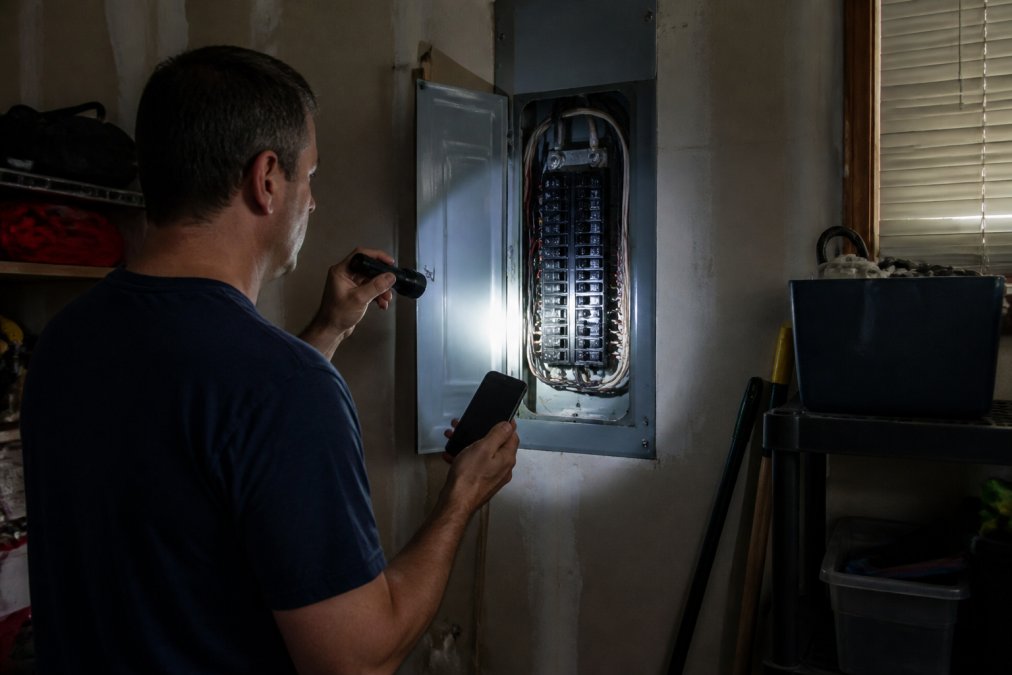
Commercial electrical troubleshooting starts with isolating the fault: is it the utility feed, the main service, a sub-panel, or a single branch circuit? That question determines whether you wait on the utility, reset a breaker, or call an electrician, the difference between a five-minute fix and a multi-hour outage.
For a business, downtime is the real cost. A partial outage that kills your point-of-sale terminals, walk-in refrigeration, or a server rack carries the same urgency as a residential emergency, refrigeration loss spoils inventory, and a POS outage drops transactions you never recover.
A qualified commercial electrician works from the source outward, not from the dead outlet backward:
Most commercial outages we see aren’t random, they’re the moment a building’s load finally outgrew its service. A tenant adds a second commercial oven, a server rack, or a bank of EV chargers, and the existing 200-amp service now runs near its limit every afternoon.
A proper electrical load calculation, required by the National Electrical Code for service changes and many additions, tells you whether your service can carry what you’re running. Skip it, and you get a breaker that trips every hot afternoon and an electrician who keeps resetting it instead of solving it.
Ask any commercial electrician to bring a clamp meter and, if they have one, a thermal camera to the first visit. A diagnosis that relies only on a voltage pen will miss the load and heat problems that cause most repeat outages.
If the fault is inside your building, you need a licensed commercial electrician, not a handyman and not a residential-only contractor. Commercial work involves three-phase power, higher fault currents, and code requirements that differ from residential. Confirm the electrician’s license covers commercial work before you book.
Electrical panel repair cost depends on the fault type, the panel’s age and brand, and parts availability. A simple breaker replacement costs far less than a full panel replacement, and only an on-site diagnosis tells you which you need.
Actual pricing depends on your panel, service size, and what the electrician finds, always get a written estimate before work begins.
| Job | Typical Range |
|---|---|
| Single breaker replacement | $150 – $400 |
| Replace a failed main breaker | $300 – $800 |
| Repair a burned bus bar or neutral | $400 – $1,200 |
| Replace a sub-panel | $800 – $2,500 |
| Full 200-amp panel replacement | $2,000 – $5,000+ |
| Service upgrade with new meter base | $3,000 – $8,000+ |
Emergency and after-hours calls typically carry a premium over standard rates. Ask up front so there’s no surprise on the invoice.
Most electricians use a rough rule: if the panel is already 25 to 30 years old, replacement usually wins. Beyond cost, replace when:
Repair makes sense when the panel is modern, parts are available, the fault is isolated to one component, and your service has headroom for your actual loads.
The cheapest quote isn’t always the lowest final bill. A repair that ignores an underlying load problem often leads to a second failure within a year. Ask any electrician to explain the root cause, not just the fix, and ask whether the repair will still be code-compliant once it’s done.
Every property is different, so we quote after we see the panel. You can request a free estimate on our website before anyone arrives.
Choose an electrician who is licensed, insured, available around the clock, and will quote before starting work. Those four things separate a reliable emergency call from a stressful one.
Ask these questions before you book:
The Texas Department of Licensing and Regulation maintains the official licensing records for electricians in the state, so you can verify a contractor’s credentials directly. A legitimate emergency electrician will never hesitate to provide a license number.
Homeowners and property managers who need a licensed electrician on call around the clock, with clear pricing and a written estimate before work starts.
At 308 Solutions Group, we’ve handled emergency electrical repair across the Dallas-Fort Worth area for over 45 years, with 24/7 availability, free estimates, and competitive pricing for homes and businesses. When your panel fails at 2 a.m., you want a team that answers and shows up.
An electrical emergency is any situation where the electrical system poses an immediate risk of fire, shock, or injury. Common examples include burning smells near outlets or panels, visible sparks, a breaker that trips repeatedly, exposed wiring, or a total power loss that affects critical systems. If you see smoke or flames, evacuate and call 911 first. For non-fire hazards like a dead panel or a burning odor with no visible fire, call a licensed electrician right away. Prompt action prevents small faults from becoming costly repairs.
Response times vary by provider, time of day, and weather conditions, but many DFW electricians offer 24/7 availability. When you call, ask for a realistic arrival estimate and confirm there is no after-hours surcharge before you agree. Keep your address, panel location, and a brief description of the problem ready so the dispatcher can route the right technician. Booking online can also speed up the process if the issue is urgent but not life-threatening.
After-hours and emergency calls often carry a higher service rate than standard weekday appointments. That said, the premium varies widely by provider. Ask upfront whether the quote includes the service call fee, diagnostic testing, and any parts. Getting a written estimate before work begins is the best way to avoid surprise charges.
Start by confirming the electrician holds a current state license and carries liability insurance and workers’ compensation. Ask for the license number and verify it through your state’s licensing board. Read recent reviews, especially ones that mention emergency response times. A reputable company will provide a written estimate, explain the diagnostic process, and stand behind the work with a warranty. If a provider pressures you into a same-day decision without documentation, keep looking.
An electrical emergency rarely announces itself politely. It sparks, it smells, or it kills the lights at the worst possible moment, and the difference between a quick fix and a disaster often comes down to who you call. 308 Solutions Group brings 45 years of experience, 24/7 emergency response, free estimates, and service for both residential and commercial properties across the Dallas-Fort Worth area. Book online with 308 Solutions Group and get a licensed electrician to your door fast.
Electrical & Plumbing Licenses:
TECL: 33332 - TSBPE: M-40316