
Last Updated: September 27, 2026
Faulty home wiring presents serious safety risks that many homeowners overlook until a problem becomes dangerous. Understanding the warning signs of faulty home wiring can help you identify electrical hazards before they cause fires, injuries, or costly damage. Here are eight critical indicators that your electrical system needs immediate attention.
Lights that flicker or dim without an obvious cause signal trouble within your electrical system. If multiple fixtures flicker simultaneously, the problem lies deeper in your wiring infrastructure rather than a single bulb needing replacement.
Dimming occurs when too many high-draw appliances run at once on the same circuit. If dimming happens predictably when you run specific appliances, you likely have an overloaded circuit. If it happens randomly or affects your entire home, faulty wiring or a failing electrical panel is more likely.
Circuit breakers trip when they detect overcurrent or short circuits. A breaker that trips repeatedly, especially when nothing unusual is running, suggests a fault in your wiring or a dangerous short circuit developing somewhere in the system.
Your electrical panel contains multiple breakers, each protecting a different circuit. Frequent trips mean your breaker is working overtime to protect you from a persistent electrical problem. Resetting the breaker repeatedly masks an underlying hazard.
A short circuit occurs when hot and neutral wires contact each other or when current finds an unintended path to ground. Damaged insulation, rodent-chewed wiring, or moisture intrusion can all cause shorts. Resetting the breaker repeatedly restores power to a dangerous condition.
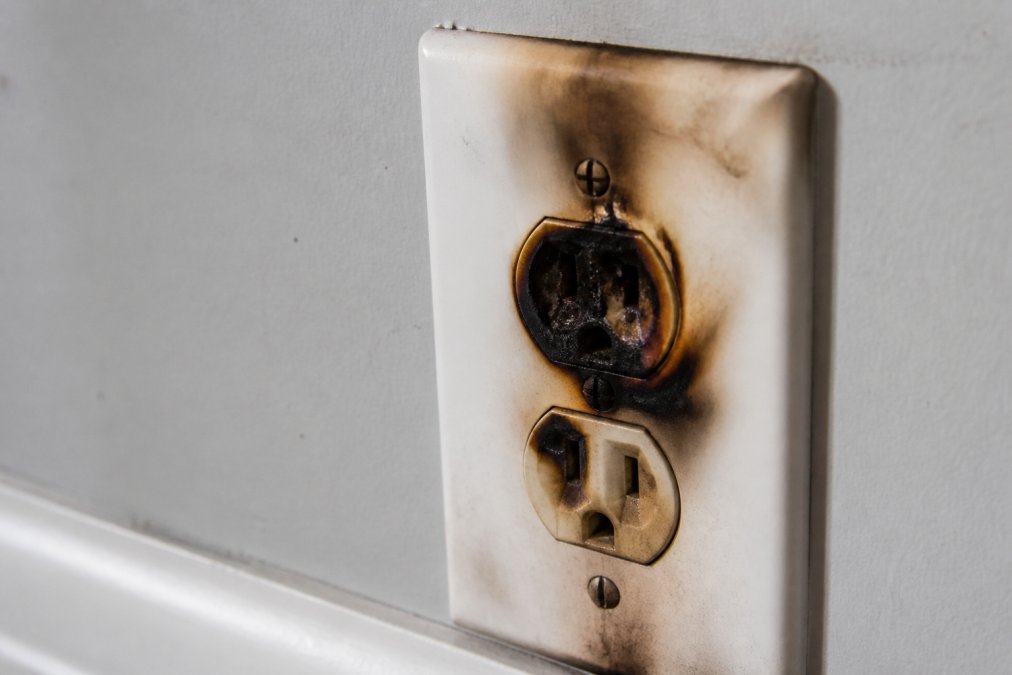
Any burning odor from an outlet, switch plate, or electrical fixture demands immediate action. Scorched marks around outlet openings show that arcing has occurred, creating extreme heat.
Outlets can scorch from loose connections, overloaded circuits, or damaged wiring. When you notice burn marks, the hazard is acute and fire risk escalates dramatically.
Never ignore a burning smell. Turn off power to that circuit immediately using your electrical panel, then call a licensed electrician. Do not attempt to use that outlet or switch plate again until a professional has inspected and repaired the problem.
Electrical systems should operate silently. Buzzing or crackling sounds from outlets, switches, or your electrical panel indicate that electricity is arcing or components are failing and require immediate professional inspection.
Arcing occurs when electricity jumps across a gap, creating intense heat that can ignite nearby materials. Buzzing might indicate loose connections or a failing component in your panel.
A switch plate or outlet cover that feels warm or hot to the touch reveals excessive heat building up inside the wall. Heat generation means current is encountering resistance and being converted to dangerous thermal energy.
Causes include loose wire connections, undersized wiring, or failing components. The heat you feel on the outside is only a fraction of what’s building inside the wall cavity, degrading insulation and increasing fire risk.
Never ignore this warning sign. Turn off power to that circuit and schedule an inspection within 24 hours.
If you can see wiring in your home, examine it for signs of damage. Frayed insulation, rodent bite marks, water damage, or exposed copper indicate that wiring integrity has been compromised.
Knob and tube wiring, common in homes built before the 1950s, lacks grounding and is considered a serious fire hazard by modern electrical codes. Aluminum wiring, used in the 1960s and 1970s, oxidizes over time and creates loose connections that generate heat (CPSC Safety Recommendations For Aluminum Wiring In Homes).
Rodents frequently chew through wire insulation, causing shorts or fire. Water damage can cause insulation to fail and create shock hazards.
Receiving a shock when touching an appliance, even a mild tingling sensation, means current is leaking where it shouldn’t, indicating a grounding problem or a fault in the appliance’s insulation.
Proper grounding provides a safe path for fault current to reach ground rather than passing through your body. If you’re getting shocks from modern appliances plugged into three-prong outlets, the problem lies in your home’s wiring or electrical panel’s grounding system.
GFCI (ground fault circuit interrupter) outlets detect ground faults and cut power instantly. These should be installed in kitchens, bathrooms, and other wet areas. If a GFCI outlet keeps tripping when you plug in a specific appliance, that appliance likely has a fault. If GFCIs are tripping without any appliance plugged in, your home’s wiring has a ground fault.
Older wiring systems were designed for lower electrical loads than modern homes demand. Today’s homes have air conditioning, electric heating, multiple televisions, computers, and countless other devices that draw far more power than homes from 50 or 100 years ago.
Knob and tube wiring lacks a ground wire entirely and is extremely vulnerable to damage and deterioration. Modern usage overwhelms these circuits. Many insurance companies refuse to cover homes with knob and tube wiring, and many lending institutions require it to be replaced before financing a property.
Aluminum wiring, used during the 1960s and 1970s, expands and contracts more than copper, creating loose connections over time. Aluminum also oxidizes, increasing electrical resistance and generating heat at connection points. Homes with aluminum wiring often require rewiring or specialized repairs.
A tripped breaker is your home’s first line of defense against electrical overload or short circuits. Understanding why it tripped is essential to preventing future incidents.
To reset a tripped breaker, locate your electrical panel, identify the tripped breaker, switch it fully to the off position, then back to the on position. If the breaker trips again immediately, do not keep resetting it, a breaker that trips repeatedly indicates a serious fault requiring professional diagnosis.
Preventing future trips requires distributing high-draw appliances across different circuits and avoiding extension cords as permanent solutions.
Your electrical panel receives power from the utility company and distributes it through breakers to individual circuits. A professional electrical panel safety inspection examines the panel, breakers, grounding system, and main service entrance.
Rewiring a house can vary in cost, depending on your home’s size, the extent of the work needed, and local labor rates.
Smart home devices add electrical load to your home’s circuits and draw continuous power. If your home’s electrical system is already stressed, adding numerous smart devices can push circuits beyond their designed capacity.
Faulty wiring significantly impacts your home’s insurance coverage and resale value. Many insurance companies require electrical inspections before issuing policies. If faulty wiring is discovered, insurers may refuse coverage, require repairs before coverage begins, or charge substantially higher premiums.
Call a licensed electrician immediately if you notice any of the warning signs described in this guide: flickering lights, frequent breaker trips, burning smells, scorched outlets, buzzing sounds, hot switch plates, visible wiring damage, or electrical shocks from appliances. Electrical work requires specialized training and knowledge of local electrical codes.
| Warning Sign | Immediate Action | Professional Service Needed |
|---|---|---|
| Flickering lights | Turn off affected circuit | Electrical inspection |
| Tripped breaker | Reset once; if it trips again, turn off circuit | Panel diagnosis |
| Burning smell | Turn off circuit immediately | Emergency electrician |
| Hot outlet | Turn off circuit; do not use outlet | Same-day inspection |
| Visible wire damage | Turn off power to area | Wiring repair or replacement |
| Electrical shock | Stop using appliance; turn off circuit | Ground fault diagnosis |
Look for visible signs of faulty home wiring including flickering lights, burning smells near outlets, buzzing sounds from the electrical panel, hot switch plates, or scorch marks around outlets. If you see frayed insulation, exposed copper wiring, or experience electrical shocks when touching appliances, stop using that circuit immediately and contact a licensed electrician. These symptoms indicate serious safety hazards that require professional inspection.
Most residential wiring lasts 50-70 years if properly installed and maintained. However, older wiring types like knob-and-tube or aluminum wiring should be replaced sooner due to fire and shock hazards. If your home is over 40 years old or shows signs of faulty wiring, schedule an electrical panel safety inspection. Homes with frequent circuit breaker trips or voltage problems may need rewiring before they reach that age.
Yes. Faulty wiring creates electrical resistance that wastes energy as heat. Damaged insulation, loose connections, and arcing in the electrical system force your home to draw more power to deliver the same service. If your electricity costs spike unexpectedly and an energy audit shows no change in usage, faulty wiring may be the culprit. A licensed electrician can identify inefficiencies during an electrical panel safety inspection.
First, stop using the affected circuit if possible. Turn off the breaker at your electrical panel if you’ve identified a specific outlet or appliance causing problems. Do not attempt repairs yourself. Contact a licensed electrician immediately for a professional inspection. If you smell burning, hear crackling, or see sparks, shut off power to that circuit and call emergency services. Document any visible damage with photos for your electrician and insurance records.
Electrical & Plumbing Licenses:
TECL: 33332 - TSBPE: M-40316