
Last Updated: October 29, 2026
Quick Summary
You can tell if pipes are corroded by watching for discolored water (brown, reddish, or blue-green), a metallic taste, falling water pressure, and visible rust, flaking, pitting, or leaks at joints. Corroded pipes often show green crust on copper or rust at galvanized joints, but only a cut-out section, borescope camera, or pressure test confirms internal corrosion.
Learning how to tell if pipes are corroded starts with one simple fact: corrosion rarely announces itself. It shows up as small changes in your water, your fixtures, and your water bill. Catching those early clues is the whole game.
Pipe corrosion is the breakdown of metal in your plumbing pipes caused by oxidation, chemical reactions, or contact with water and minerals. Left alone, it thins the pipe wall until it cracks.
Below, we’ll show you exactly what to look for, what each symptom usually means, and when to call a pro. Here’s what most guides get wrong: they list symptoms without telling you which ones point to corrosion versus a different problem entirely.
Discolored water is the most common corrosion symptom, and the color tells you a lot. Brown or reddish water usually means rust from iron or galvanized pipes is entering the flow.
Blue-green water is different. That tint usually signals copper pipe corrosion, where the metal is breaking down and staining fixtures. If you only see color when you first turn on the tap, the rust is likely sitting in the pipe overnight.
A metallic taste in your tap water is a direct sign that metal is dissolving into your supply. Many homeowners describe it as tasting like pennies or old coins.
Falling water pressure is the third piece of the puzzle. As corrosion builds up inside a pipe, it narrows the opening and reduces water flow. You may notice weak showers or slow faucets. If the pressure is dropping and you want to act early, our guide on how to fix low water pressure covers the fixes you can try yourself.
Galvanized pipe is the easiest to diagnose because of its age and look. Galvanized steel was common in homes built before the 1960s, and it rusts from the inside out. If your home is that old and still has original plumbing, the odds of corrosion are high.
Here’s how to check:
A common mistake is judging a galvanized pipe only by its outside.
Copper pipe corrosion shows up differently than rust, and the type of corrosion matters as much as the color. Instead of red-brown stains, copper usually leaves blue-green water or green crust on the pipe surface. That green film is called patina, and a thin, even layer on the outside is normal and protective.
The trouble starts when the corrosion is internal or localized. Copper fails in two main patterns:
Surface appearance cannot confirm internal corrosion. A copper pipe can look clean outside and be pitted through the wall inside. The only reliable confirmation comes from cutting out a section for inspection, using a borescope camera, or pressure-testing the line. If you see green crust, pinholes, or repeated leaks at the same run, treat it as a signal to bring in a professional, not as proof on its own.
If your home has copper and you are seeing pinholes or blue-green staining, a water chemistry test and a professional inspection are the two most useful next steps.
Understanding the causes of pipe corrosion helps you stop the cycle. Most cases trace back to a handful of factors:
If your water has a strange taste or smell, a water quality test can tell you whether chemistry is the culprit. The EPA’s guidance on drinking water contaminants explains what common tests can reveal.
You can check for corrosion safely without touching a live pipe or opening a wall. Work through this checklist slowly and note what you find.
Total time: about 20 minutes. Difficulty: beginner.
Never open a wall or loosen a fitting yourself. If you spot rust, pitting, or a leak, stop and call a professional. Our companion article on the key signs of failing pipes helps you compare what you found against other common symptoms.
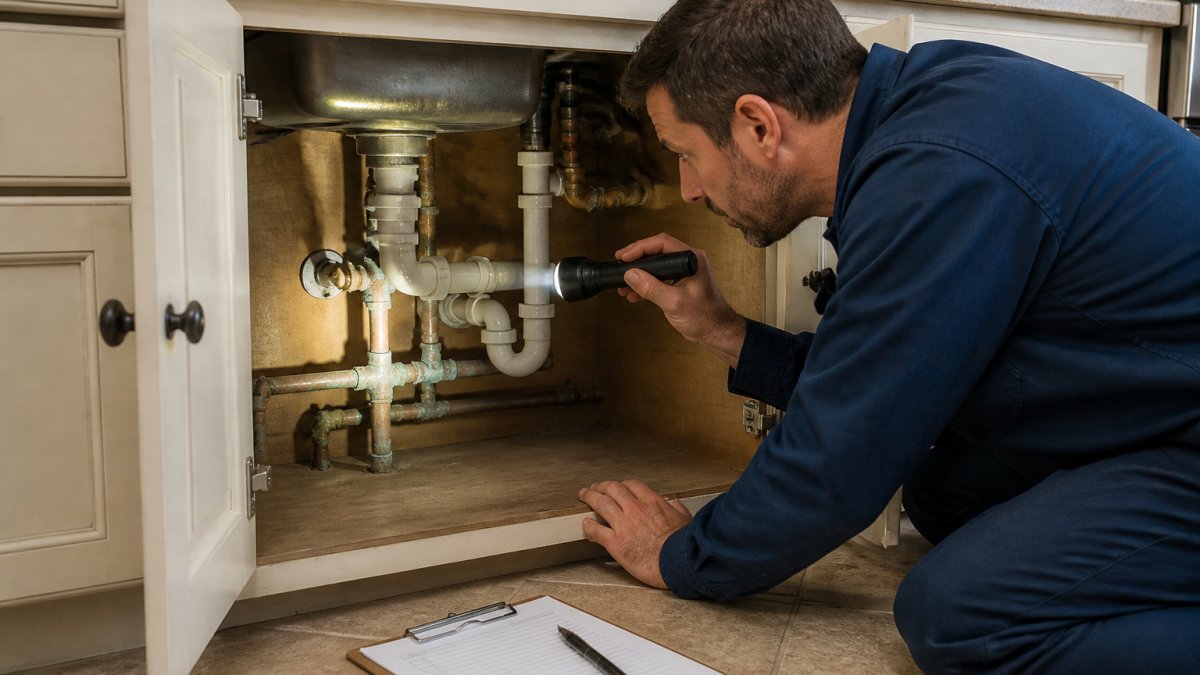
The repair-or-replace decision comes down to how far the corrosion has spread. One small section of rusted pipe can often be cut out and repaired. Widespread corrosion across a whole system usually means replacement is the smarter call.
Use this simple guide:
| What You’re Seeing | Likely Fix | Why |
|---|---|---|
| One rusted joint or short section | Targeted repair | Damage is contained |
| Pitting or leaks at multiple joints | Partial replacement | Corrosion is spreading |
| Galvanized pipes throughout the home | Full replacement | Age and internal rust |
| Blue-green staining with pin-hole leaks | Copper section replacement | Wall thinning is advanced |
| Leaks plus water damage in walls | Professional assessment | Hidden damage likely |
Watch out: patching one leak when the rest of the pipe is thin just moves the problem down the line. If you’re weighing options, our professional plumbing repair team can assess the system and give you a straight answer. When you want a pro to confirm whether it’s time to escalate, a professional plumbing inspection will tell you.
You don’t have to guess whether those brown stains or weak faucets mean trouble. 308 Solutions Group has served Dallas-Fort Worth homes and businesses for over 45 years. We offer free estimates and 24/7 emergency support when a pipe gives out at 2 AM. For current pricing, visit the 308 Solutions Group website or request a quote.
Our team handles water heater replacements and sewer line maintenance, as well as repair work on residential and commercial plumbing.
Get started with 308 Solutions Group to protect your plumbing before a small leak becomes a bigger problem. Contact us to book your corrosion inspection today.
The biggest factors are water chemistry, pipe material, and age. Acidic or high-mineral water speeds up oxidation inside iron and galvanized pipes. Copper pipe corrosion often traces to low pH or stray electrical current. Older galvanized steel rusts from the inside out, and joints, bends, and connections corrode first. Water velocity, temperature, and dissolved oxygen also play a role. Identifying the cause helps a plumber recommend repair or replacement instead of just patching symptoms.
Yes. As rust and mineral buildup narrow the inside of a pipe, water flow drops and pressure falls throughout the system. You may notice weak flow at fixtures farthest from the main, or pressure that fades during heavy use. Aerator clogs from rust particles make it worse. If low water pressure comes with discolored water or a metallic taste, corroded pipes are a likely cause and worth a professional inspection.
Galvanized pipes are dull gray steel with a zinc coating that turns white or rust-streaked over time. Look for brown water on first draw, rust flakes in the aerator, pitting or flaking on exposed sections, and falling pressure. A simple scratch test on an exposed pipe can confirm galvanized steel. Because these pipes corrode from the inside, a camera inspection gives the clearest picture of how much life is left.
Replace when corrosion is widespread, leaks recur, or water quality and pressure keep declining. A single pinhole leak in copper can often be repaired, but repeated leaks, pitting across multiple sections, or galvanized pipe near the end of its service life point to replacement. A plumber can assess the extent with a camera inspection and give you a free estimate on repair versus full replacement so you can decide with real information.
Corroded pipes rarely fail without warning. The color, taste, and pressure clues are there if you know where to look. If your inspection turned up rust, pitting, or leaks, don’t wait for the next symptom. Reach out to 308 Solutions Group for a free estimate and 24/7 emergency support, and let our team confirm what’s happening inside your pipes before it costs you more.
Electrical & Plumbing Licenses:
TECL: 33332 - TSBPE: M-40316
