
Last Updated: October 31, 2026
Quick Summary
To find a reliable local plumber, build a shortlist of three to five companies through referrals and reviews before you need one. Then verify each candidate’s license, liability insurance, workers’ comp, and bonding in writing.
A burst pipe at 2 AM is the worst time to start searching for a reliable local plumber. Most homeowners who have been through an emergency say the same thing: they wish they had found someone before the water started spreading across the floor. At 308 Solutions Group, we have spent over 45 years serving homeowners and property managers across the Dallas-Fort Worth area. Homeowners who vet a plumber in advance tend to make calmer decisions and avoid the costly mistakes that come from rushing.
A reliable local plumber is a licensed, insured professional who shows up on time, explains the work clearly, and puts the price in writing before any digging begins. Finding one takes a little effort upfront, but it saves far more time and money later.
Start with people you trust. Ask friends, family, neighbors, and coworkers who have had recent plumbing work done. Ask specifically about the experience: Did the plumber arrive when promised? Did the bill match the estimate? Did the problem stay fixed?
Next, check local search results and online reviews. Look for patterns across many reviews rather than focusing on one or two. A few negative reviews are normal. A pattern of missed appointments or surprise charges is not.
Aim for a shortlist of three to five companies before you need service. That gives you options if your first choice is booked or unavailable.
Credentials are the part of hiring many homeowners skip, and it is an important part of protecting yourself. Treat verification as a short, repeatable process rather than a single question.
1. Plumbing license. Ask for the license number and the name it is issued under.
2. General liability insurance. Ask for a certificate of insurance (COI) and read it, don’t just glance at it.
3. Workers’ compensation coverage. This is the coverage homeowners most often forget. If an employee is injured on your property and the company does not carry workers’ comp, you can be exposed to a claim. Ask for proof of coverage and confirm it is active.
4. Bonding. A surety bond is not insurance for your property, it is a financial guarantee that gives you recourse if the company fails to complete the job or violates licensing rules. Ask whether the company is bonded and for the bond amount.
5. Complaint history. Before you commit, check the licensing board’s complaint records and your local consumer protection agency. A single complaint is not disqualifying; a pattern of unresolved complaints about the same issue, no-shows, unfinished work, billing disputes, is a strong signal to keep looking.
Keep copies of everything you verify, license number, COI, and bond information, with your estimate. If a dispute arises later, you will want the paper trail.
State plumbing license lookup and complaint records
Once you have verified credentials, compare companies on the factors that matter most for your job. Price is only one of them.
| Factor | What to Look For |
|---|---|
| Licensing | Active license verified with TDLR |
| Insurance | Current liability and workers’ compensation certificates |
| Experience | Years in business and experience with your type of job |
| Availability | Clear answers on response times and after-hours service |
| Written estimate | Itemized pricing delivered before work starts |
| Warranty | Written terms on parts and labor |
We recommend matching the company to the job. A small leak repair and a full sewer line replacement call for different levels of experience and equipment. Ask each company whether they regularly handle work like yours, and ask for examples from your area.
Pay attention to how the company communicates from the first call. Clear answers, a fair explanation of the process, and a willingness to put terms in writing usually predict how the job will go. If you want to catch problems early, see the signs that call for a professional plumbing inspection in Fort Worth.
A short list of direct questions can reveal a lot. Ask these before you agree to any work:
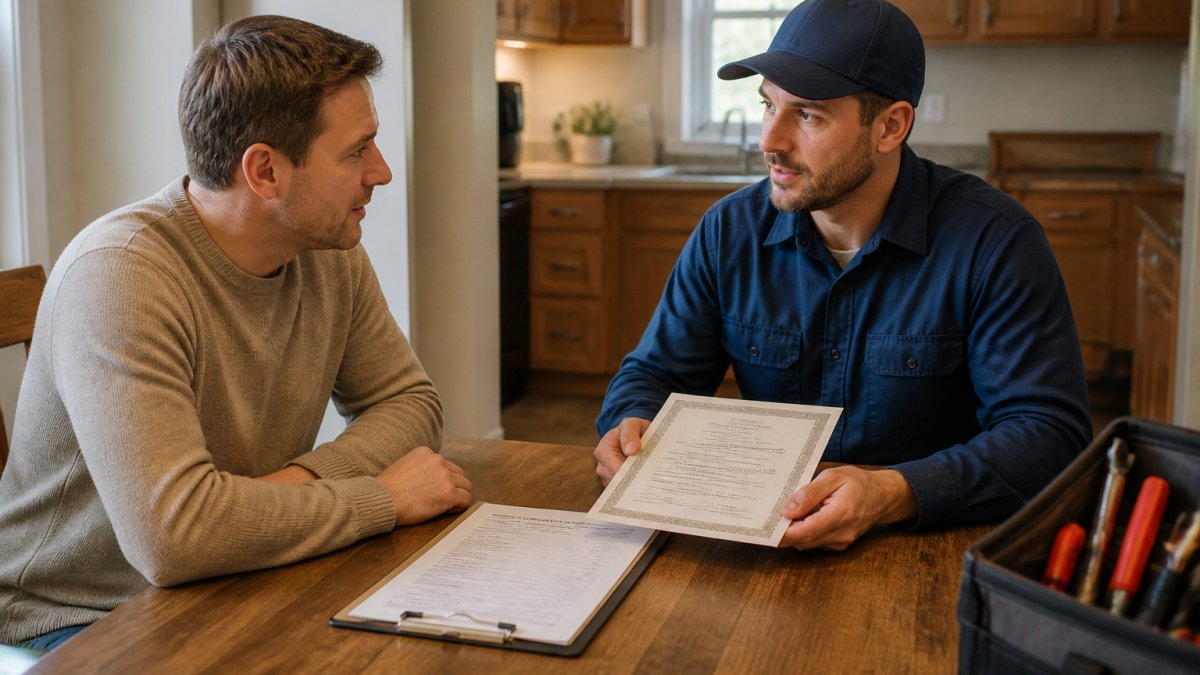
Write down the answers. If a plumber dodges a question or gets vague, keep looking.
Plumbers generally price work in one of three ways, and knowing which model you are looking at makes quotes comparable:
None of these is inherently unfair. The problem is comparing a flat-rate quote against a time-and-materials quote without knowing what each includes. That is why the written estimate matters more than the headline number.
What a fair itemized estimate should show. Ask for labor, parts and materials, the trip or diagnostic fee, permit costs (if a permit is required), and any minimum charge, each as a separate line. A single lump sum with no breakdown is hard to compare and easy to inflate later.
How to compare two or three quotes. Line them up side by side and compare what is included, not just the total. One quote may include haul-away of the old fixture, permit fees, and a parts-and-labor warranty; another may exclude all three. The lower total can be the more expensive choice once the exclusions are added back. Ask each company the same questions so the answers line up:
Change orders: where fair quotes go wrong. The most common way a reasonable estimate becomes a painful bill is additional work approved verbally mid-job. Hidden damage, a corroded fitting behind a wall, a cracked flange under a toilet, is real, and good plumbers find it.
Deposits and payment schedules. For routine repairs, payment on completion is standard. For larger jobs, a deposit is common, but keep it reasonable relative to the total and never pay the full balance before the work is complete and inspected. Pay by a method that leaves a record, check or card, rather than cash, and get a final itemized invoice that matches what you approved.
For a general sense of pricing, ask each company for a written estimate and confirm the actual price in writing before work begins. Our sewer line repair cost estimates for Dallas-Fort Worth show what typical pricing looks like in your area. A quote that is far below every other bid usually means something is missing from the scope, not that you found a bargain.
Most problems come from a few predictable situations. Watch for these warning signs:
Ask the plumber to show you the failed part or the affected area. A good plumber explains what is wrong and why the fix is needed. If the explanation is unclear, get a second opinion before approving expensive work.
For a complete checklist of warning signs and protections, read our guide on how to avoid surprise plumbing charges.
Watch out: Approving “additional work” by phone without a written change order is a common way a small job becomes a large bill. Ask for every change to be written and priced before the crew proceeds.
At 308 Solutions Group, we offer 24/7 emergency support for residential and commercial properties across Dallas-Fort Worth. With over 45 years in the field, we handle water heater replacements and sewer line maintenance.
If you need a plumber before a problem gets worse, reach out to us today. You can book online or request a quote through our website for current pricing.
Start by confirming the plumber holds a current license issued by the state or local licensing authority, carries general liability insurance, and is bonded. Ask for the license number and look it up yourself on the licensing board’s website rather than relying on a copy. Check that the company name on the license matches the business name on the invoice and the truck. Finally, confirm the plumber will pull any permits the job requires, since unpermitted work can cause problems when you sell the home or file an insurance claim.
Yes, for any job that is not an emergency. Getting at least three written, itemized estimates lets you compare labor hours, parts, service fees, and warranty terms side by side. A quote that is far below the others often means corners will be cut or extra charges will appear later. Ask each company to describe the work the same way so the numbers are comparable. For emergencies, a single reputable company is usually the right call, but ask for the price in writing before work begins.
Plumber rates vary with the company, the complexity of the job, the time of day, and whether the work is an emergency. Many companies bill an hourly rate with a minimum charge, while others quote flat prices for common jobs. Rather than relying on a general figure, request a written estimate that breaks out labor, parts and materials, and any trip or service fee. For current pricing on 308 Solutions Group services, visit the company’s website or request a quote directly.
Get a written, itemized estimate before any work starts and never sign a blank authorization. Be wary of companies that demand full payment upfront, refuse to put prices in writing, or pressure you to decide immediately. Require that any change order be approved in writing before the extra work is done. Pay by a traceable method, keep every invoice, and confirm the warranty terms in the contract.
Electrical & Plumbing Licenses:
TECL: 33332 - TSBPE: M-40316
