
Last Updated: October 4, 2026
Electrical safety tips for older homes aren’t optional, they’re essential protection against fire hazards, appliance damage, and potential injury. Homes built before the 1980s often contain outdated wiring systems that were safe for their era but fall dangerously short of modern electrical demands. Today’s households run dozens of devices simultaneously: air conditioning units, water heaters, multiple televisions, charging stations, and smart home systems.
At 308 Solutions Group, we’ve spent over 45 years helping homeowners in the Dallas-Fort Worth area identify and resolve electrical hazards before they become emergencies. The reality is stark: outdated electrical systems cause thousands of house fires annually. Many of these fires are preventable with proper inspection and upgrades.
The good news is that understanding the warning signs and taking action can dramatically reduce your risk. This guide covers the most critical electrical safety tips for older homes, from identifying dangerous wiring to understanding when professional intervention becomes mandatory.
Recognizing outdated wiring is your first line of defense. Two types of wiring systems are particularly concerning in older homes: knob-and-tube wiring and aluminum wiring. Both pose genuine fire and shock hazards that modern wiring standards eliminated for good reason.
Knob-and-tube wiring was the standard in homes built before 1950. This system uses ceramic knobs to support individual copper wires running through walls, with porcelain tubes protecting wires where they pass through framing. The system lacks grounding, a critical safety feature in modern electrical systems.
Knob-and-tube wiring deteriorates over time as insulation becomes brittle and cracks. When insulation fails, exposed wires can arc and ignite surrounding materials. The system also cannot handle modern electrical loads. Adding insulation to attics or walls around knob-and-tube wiring traps heat and accelerates insulation breakdown, creating fire risk.
If your home has knob-and-tube wiring, your insurance company may refuse coverage or charge premiums that make replacement economically necessary. Many jurisdictions now require replacement when selling a home. This is one of the most critical electrical safety tips for older homes: if you see ceramic knobs and individual wires in your attic or walls, prioritize professional assessment immediately.
Aluminum wiring was installed in many homes during the 1960s and 1970s as a cost-saving alternative to copper. While aluminum itself isn’t inherently dangerous, it oxidizes when exposed to air and moisture. This oxidation creates a poor electrical connection that generates heat at junction points.
Aluminum wiring also expands and contracts at different rates than copper connections and outlet boxes, causing connections to loosen over time. Loose connections generate heat, which can ignite surrounding materials. Flickering lights, warm outlets, or a burning smell near electrical fixtures are warning signs of aluminum wiring problems.
You can identify aluminum wiring by looking at the wire itself, it appears silver rather than copper-colored. If you find aluminum wiring, have a licensed electrician evaluate the connections. In many cases, professionals can install special connectors that prevent oxidation and loose connections, extending the safe life of the system.
Ground fault circuit interrupter (GFCI) outlets are essential safety devices that instantly cut power when they detect a ground fault, a situation where electricity takes an unintended path to ground, often through water or a person. GFCI protection prevents electrocution in wet environments.
Modern electrical code requires GFCI outlets in bathrooms, kitchens, laundry rooms, basements, and outdoor areas. Older homes often lack this protection entirely.
GFCI outlets have a “Test” and “Reset” button on the face. The Test button intentionally triggers a ground fault so you can verify the outlet is functioning. Monthly testing ensures your protection remains active. Some GFCI outlets protect multiple downstream outlets on the same circuit, so a single outlet installation can safeguard several devices.
If you’re upgrading an older home’s electrical system, prioritize GFCI installation in high-risk areas. This single upgrade dramatically reduces electrocution risk and is often required by insurance companies or building codes before home sale.
Older homes typically use fuse boxes instead of modern circuit breaker panels. Both systems serve the same purpose: they interrupt power when a circuit draws too much current. However, they work differently and have different safety implications.
A fuse box contains replaceable fuses, cylindrical devices that melt when current exceeds their rating, breaking the circuit. The problem emerges when homeowners install oversized fuses to prevent nuisance trips.
Modern circuit breaker systems use mechanical switches that trip instantly when current exceeds the breaker’s rating. These switches can be reset rather than replaced, and they’re less tempting to bypass or upgrade without professional guidance.
If your home still has a fuse box, consider upgrading to a circuit breaker panel as part of your electrical safety improvements. This upgrade increases your home’s electrical service capacity, supports modern appliances, and eliminates the temptation to install unsafe oversized fuses.
Grounding and bonding are the foundation of electrical safety. Grounding provides a safe path for fault currents to return to earth, preventing dangerous voltage buildup.
Older homes often lack proper grounding. Two-wire systems (hot and neutral only) were common before modern three-wire systems added a dedicated ground wire. Without grounding, fault currents cannot safely dissipate, and metal parts of appliances or fixtures can become live with dangerous voltage.
Upgrading to three-prong outlets and installing proper grounding requires running a ground wire from the outlet back to the service panel and ultimately to a ground rod driven into the earth.
Bonding also requires professional attention. All metal water pipes, gas pipes, and structural steel must be bonded together and connected to the grounding system. In older homes, this bonding often doesn’t exist or has corroded away.
Rewiring an older home is a significant investment, but it’s often necessary for safety and to support modern electrical loads. The cost varies based on home size, existing wiring condition, and local labor rates.
Some homeowners consider partial rewiring, replacing only the most hazardous circuits or upgrading to a new service panel while leaving existing wiring in place.
A full rewiring project typically involves removing old wiring, installing new copper wiring in updated conduit or cable, upgrading the service panel, and installing modern outlets and switches throughout the home. The project requires permits and inspections to ensure compliance with current electrical code.
Before committing to rewiring, have a licensed electrician conduct a comprehensive electrical inspection. This assessment identifies which circuits pose immediate risk and which upgrades are truly necessary. Some homes need full rewiring; others can achieve safety through targeted upgrades to the most hazardous areas.
A systematic inspection helps you identify electrical hazards before they cause damage. This checklist covers the most important items to evaluate in an older home.
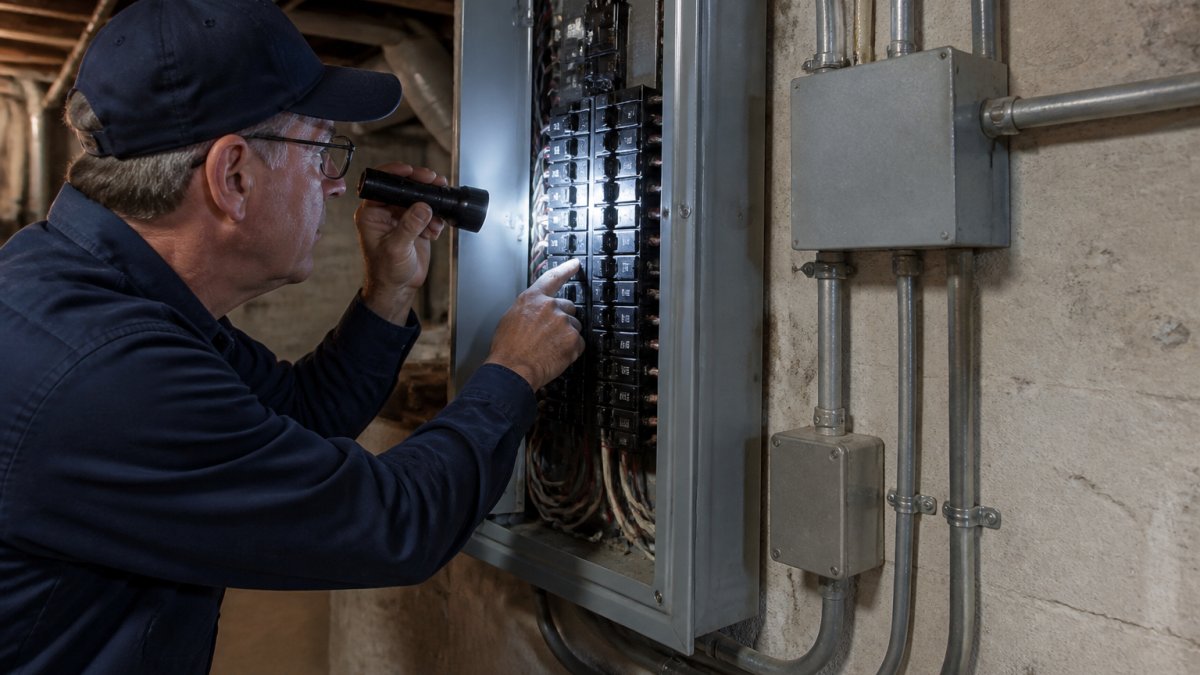
Start with a visual survey of your electrical system. Begin in the basement or utility area where your service panel is located.
Examine the wiring visible in the attic, basement, and crawl spaces. Look for ceramic knobs and tubes (knob-and-tube wiring) or silver-colored wires (aluminum wiring).
Walk through each room and inspect outlets and switches. Count how many outlets are in each room, older homes often have far fewer than modern standards recommend.
Test GFCI outlets by pressing the Test button. The outlet should immediately cut power. Press Reset to restore power.
Check that all three-prong outlets are actually grounded. Use a three-light outlet tester (available at hardware stores) to verify grounding.
Look for extension cords used as permanent wiring. Extension cords are temporary solutions and should never power appliances long-term. Permanent circuits should be installed instead.
Call a licensed electrician if your inspection reveals any of these conditions: knob-and-tube wiring, aluminum wiring with loose or corroded connections, outlets that don’t test as properly grounded, GFCI outlets that fail the Test button, a service panel with visible burning or corrosion, circuits that repeatedly trip or blow, outlets that are warm or emit a burning smell, flickering lights that suggest loose connections, or any wiring that appears damaged or deteriorated.
Professional electricians have specialized testing equipment that goes far beyond visual inspection. They can identify hidden hazards within walls, verify that bonding and grounding meet code standards, and assess whether your service capacity is adequate for your home’s electrical load.
Insurance companies take electrical safety seriously. Many insurers now require GFCI protection in specific areas and refuse coverage for homes with knob-and-tube or ungrounded aluminum wiring. Some require electrical inspections before issuing policies on older homes.
When selling a home, many jurisdictions require electrical inspection and disclosure of any hazards. Buyers’ lenders often won’t finance a home with major electrical deficiencies.
Modern electrical codes exist because they prevent fires and electrocution. These codes are updated regularly as technology and safety knowledge evolve.
Upgrading to meet current electrical code standards protects your family, increases your home’s value, and ensures insurance coverage. The investment in electrical safety is an investment in your home’s longevity and your family’s protection.
Older homes deserve electrical systems that match their modern use. Electrical safety tips for older homes start with understanding what hazards exist, then taking decisive action.
Older homes frequently contain knob-and-tube wiring, aluminum wiring, ungrounded outlets, and undersized service panels. These create fire hazards and shock risks. Insulation degradation accelerates these dangers. Flickering lights, burning smells, and frequently tripped breakers are warning signs. Have a licensed electrician inspect your home if you notice these issues or live in a house built before 1970.
Outdated wiring appears as cloth-covered wires in the attic or basement, or as two-wire systems without a ground wire. Knob-and-tube wiring uses ceramic knobs and tubes to support wires. Aluminum wiring (common in 1960s-1970s homes) oxidizes over time, creating loose connections. Ungrounded outlets lack the third round hole. If your home was built before 1980, request a professional electrical inspection to assess wiring age and safety.
Ground Fault Circuit Interrupters detect dangerous electrical imbalances and cut power in milliseconds, preventing electrocution. GFCI protection is now required in kitchens, bathrooms, garages, and outdoor areas by the National Electrical Code. Older homes often lack GFCI outlets entirely. Installing GFCI outlets or GFCI circuit breakers is one of the most effective upgrades for older homes, significantly reducing shock and fire hazards.
Upgrade your panel if it’s a fuse box, has frequent tripped breakers, shows signs of burning or corrosion, or lacks capacity for modern appliances and smart home devices. Older panels typically provide 60-100 amps; modern homes need 200 amps. A full upgrade ensures code compliance, supports new electrical loads, and reduces fire risk. Consult a licensed electrician to assess your service capacity and determine if partial upgrades or full replacement is needed.
Watch for flickering lights, outlets that don’t hold plugs firmly, burning smells near outlets or the panel, frequently tripped breakers, and warm switch plates. These indicate voltage drop, loose connections, overloaded circuits, or insulation degradation. Two-wire systems without ground wires are especially risky. Preventative maintenance and professional inspections catch problems before they become fire hazards or cause appliance damage.
Yes. Ungrounded two-prong outlets lack the protective ground wire, eliminating a critical safety path for electrical faults. This increases shock risk and prevents safe operation of modern three-prong appliances. Upgrading to grounded three-prong outlets or installing GFCI protection on two-prong circuits provides essential safety. The National Electrical Code requires grounded outlets in kitchens, bathrooms, and other wet areas.
Costs depend on the scope of work, your home’s current condition, local labor rates, and whether you need partial repairs or full rewiring. A simple GFCI outlet installation costs far less than a full panel upgrade or rewiring project. For accurate pricing on electrical safety upgrades, contact 308 Solutions Group for a free estimate. They’ll assess your home and provide transparent pricing based on your specific needs.
Electrical & Plumbing Licenses:
TECL: 33332 - TSBPE: M-40316