
Last Updated: October 25, 2026
Quick Summary
How to choose a local plumber involves verifying their license through your state or local plumbing board, confirming liability insurance and workers’ compensation coverage, asking references and warranty questions, comparing itemized estimates from at least three plumbers, and confirming they’ll pull required permits and handle inspections.
Knowing how to choose a local plumber isn’t just about price. It’s about finding someone who shows up when promised, diagnoses problems accurately, and stands behind their work.
This guide walks you through the exact steps to evaluate and hire a reliable local plumber: licensing verification, insurance confirmation, the questions that separate professionals from amateurs, comparing quotes, and emergency service.
The first step in vetting a local plumber is confirming they’re licensed. Requirements vary by state and locality, but a licensed plumber has passed exams on plumbing codes, safety standards, and installation techniques.
Ask for their license number, then verify it through your state or local plumbing board. Most states maintain searchable online databases to confirm active licenses, check complaints, and see disciplinary history.
Use this sequence so you don’t skip a check under pressure:
Licenses are issued at the state or local level, so one valid across town may not be valid where you live.
Also ask about certifications specific to your work, water heater installation, sewer line repair, or commercial systems.
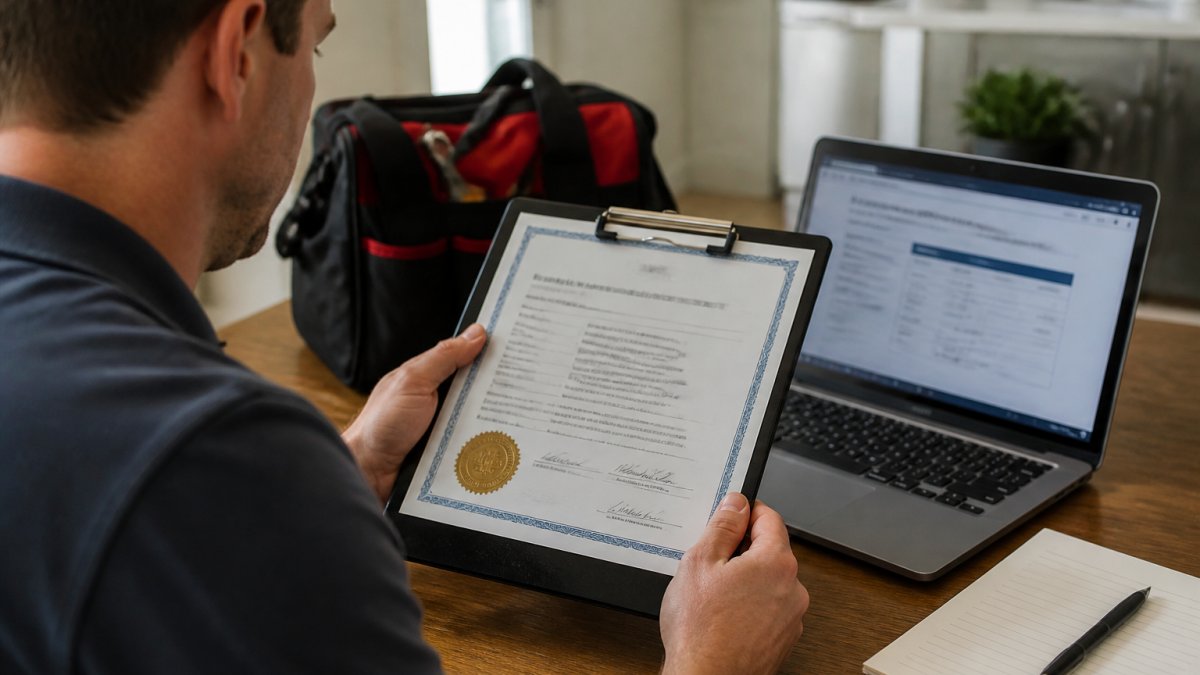
Certain plumbing jobs require permits and inspections. A knowledgeable local plumber will tell you upfront if your project needs one; if they suggest skipping permits, walk away.
As a rule of thumb, permits are more often required for work that changes the plumbing system: water heater replacements, repiping, sewer line replacement, new fixture installations that add or move supply or drain lines, and gas line work.
You can also check if a plumber needs a permit for your specific work.
Ask how long the plumber has been in business locally. Longevity suggests stability and familiarity with local codes, cross-check the business name against state registration records and the licensing database.
If a plumber damages your property or gets injured on it, their insurance should cover it, not your homeowner’s policy.
Ask for proof of liability insurance (covers damage to your property) and workers’ compensation coverage (covers injuries to their employees).
Bonding is different: a bond covers your losses up to the bond amount if the plumber fails to finish or violates the contract.
Call the insurance provider to verify coverage is active, five minutes that confirms the documents aren’t fake.
The questions you ask before hiring reveal whether a plumber is professional and trustworthy. Here are the essential ones:
“Can you provide references from work you’ve completed in the last year?” Call two or three recent customers and ask: Did the plumber show up on time? Clean up? Did the work hold up? Any surprise charges?
“How do you diagnose problems?” A good plumber describes how they’ll identify the root cause before proposing solutions.
“What’s your warranty or guarantee on the work?” Professional plumbers stand behind their work with warranties.
“Do you charge for the estimate?” Most reputable local plumbers offer free estimates.
“How do you handle emergencies?” Ask about 24/7 availability, typical response time, and the cost difference for emergency calls.
Getting three estimates gives you a realistic picture of fair pricing, but comparing quotes requires more than the bottom number. Request written, itemized estimates breaking down labor, materials, and service fees. Vague quotes like “around $800” are useless, you need hours of labor, hourly rate, exact materials, and additional charges.
Here’s the structure a fair estimate typically follows:
Lined up this way, three estimates show whether the difference is labor rate, material grade, scope, or margin.
Create a one-page grid with the same rows for every quote: diagnosis fee, labor, materials, permit, disposal, total, warranty length, and payment terms. Then ask:
Watch for unusually low bids. If one plumber quotes $400 while two others quote $800, ask why.
Common patterns behind a low bid:
guidance on identifying pricing red flags and hidden charges recommends getting everything in writing before work begins. A written estimate protects both you and the plumber by setting clear expectations.
Be equally skeptical of unusually high bids: ask what justifies the premium. Sometimes it’s better equipment or genuine expertise; other times it’s just inflated pricing.
Ask each plumber how they handle unexpected issues, corroded pipes, code violations, complications. A good estimate includes language like “additional charges may apply if we discover X.” The Avoid Surprise Plumbing Charges Guide walks you through protecting yourself from bill shock.
Before work starts, agree on the change-order process: who authorizes additional work, whether it’s verbal or written, and whether you’ll get a revised estimate first. A professional stops and gets your approval before doing work beyond the original scope.
Finally, trust your gut about communication. The plumber who takes time to explain the work is more likely to deliver good service than the one who rushes through the estimate.
An itemized estimate should break down all costs and terms so you can compare quotes fairly.
| Estimate Component | What It Includes | Why It Matters |
|---|---|---|
| Diagnosis or service call fee | Flat charge for identifying the problem | Often credited toward repair if you hire them |
| Labor | Hours estimated × hourly rate or flat job price | Clarify which pricing model they use |
| Materials | Itemized parts with brand or model | Lump-sum materials are a yellow flag |
| Permit fees | Pass-through costs for required permits | Listed separately from labor and materials |
| Disposal and cleanup | Hauling away old equipment or debris | Sometimes charged separately |
| Contingency language | How surprises trigger change orders | Protects you from unexpected bill increases |
| Payment terms | Deposit, progress payments, final balance | Clarifies when money is due |
| Warranty terms | Coverage length and what’s included | Shows whether plumber stands behind work |
When a plumbing emergency hits, burst pipe, sewage backup, complete water loss, a plan made beforehand makes the crisis less chaotic:
Identify your local plumber before you need them. Research and vet plumbers during normal times, and keep their contact information accessible. Don’t wait until 2 AM to figure out who to call.
Confirm they offer 24/7 emergency service. Verify this upfront and ask about emergency response times and after-hours pricing.
Know where your main water shutoff is located. In a burst-pipe scenario, shutting off water immediately minimizes damage. Locate this valve now and label it clearly.
Document the emergency with photos. Take pictures of the damage before the plumber arrives, this helps with insurance claims and gives the plumber context.
Have your plumber’s license and insurance information verified. Do this earlier so you know they’re legitimate when you’re too stressed to check.
Ask about emergency pricing upfront. Emergency calls often cost more than scheduled work. Understand the pricing structure so you’re not shocked by the bill.
Get a written estimate even in emergencies. A professional provides a quote before starting work, even in urgent situations. If they refuse, that’s a problem.
Confirm what’s included in the emergency service. Does it cover diagnosis only, or full repair? Get clarity before they start.
When you need emergency plumbing repair, book your service directly with a provider you’ve already vetted. The time to research is before crisis strikes, not when water is flooding your basement.
Finding a trustworthy local plumber comes down to doing your homework: verifying licenses and insurance, asking the right questions, comparing detailed estimates, and checking references. These steps save you from costly mistakes.
At 308 Solutions Group, we’ve been serving the Dallas-Fort Worth area for over 45 years.
When you’re ready to hire a local plumber you can trust, contact 308 Solutions Group for your free estimate.
Verify your local plumber’s license through your state’s licensing board or plumbing contractor board website. Ask for their license number, check their insurance coverage directly with their insurer, and request references from recent jobs. Licensed plumbers have met specific training and exam requirements, so this step protects you from unlicensed operators who may do substandard work.
Ask about their experience with your specific issue, warranty on workmanship, whether permits are needed, how they handle unexpected problems, their availability for follow-up service, and their payment terms. Also ask if they provide a written estimate and how they price emergency calls. These questions reveal professionalism and help you avoid surprises after work begins.
Request itemized estimates from at least two licensed plumbers that break down labor, materials, and service fees separately. Compare the scope of work carefully, quotes that seem unusually low may indicate corner-cutting or hidden charges later. Check that both quotes address the same problem and include warranty details, so you’re truly comparing apples to apples.
Contact a licensed plumber offering 24/7 emergency service immediately. Turn off water at the main valve if there’s active flooding, then document the damage with photos for insurance. Ask about their emergency response time and pricing structure for after-hours calls when you call. Having a trusted local plumber on file before an emergency strikes saves time and stress when pipes burst or sewage backs up.
Avoid plumbers who cannot provide proof of licensing, lack insurance, refuse to give written estimates, quote prices significantly lower than competitors, or pressure you into immediate decisions. Be wary of those who won’t discuss warranty terms, cannot provide references, or operate without a physical business address. These signs often indicate inexperience or dishonest practices that lead to poor workmanship and unexpected costs.
Yes, getting two or three competitive bids helps you understand fair pricing and service differences. However, don’t choose based on price alone. Compare the plumber’s experience, warranty, response time, and professionalism alongside cost to make a balanced decision that protects your home and budget.
The right local plumber isn’t the cheapest one or the first name that comes up in a search. It’s the professional who’s licensed, insured, experienced, and committed to doing the job right. Take time to evaluate your options, ask tough questions, and verify credentials. Your home’s plumbing system is too important to leave to chance.
Electrical & Plumbing Licenses:
TECL: 33332 - TSBPE: M-40316
