
Last Updated: November 19, 2026
Quick Summary
To hire an electrician Little Elm homeowners can trust, verify the license through the state licensing lookup, confirm general liability and workers’ compensation insurance with documents, and make sure the contractor pulls the permit in its own name. Get a written, itemized estimate and compare bids on scope, materials, labor, permits, cleanup, and warranty.
Electrical work is one of the few home repairs where a small mistake can start a fire inside a wall and stay hidden for years. That risk is why electrical wiring is regulated work, not a weekend project. The expensive emergencies that electrical professionals often see tend to trace back to unpermitted or amateur work done years earlier.
Finding a trustworthy electrician Little Elm homeowners can rely on matters more than most realize.
Here is the core problem: electrical failures rarely announce themselves. A warm outlet cover, a faint burning smell, or a breaker that trips once a month are all early warnings. Most people ignore them until something fails completely.
A tripped breaker is not a malfunction. It is the safety device doing its job by cutting power when a circuit draws more current than it can handle. Resetting it correctly takes about two minutes and a few precautions.
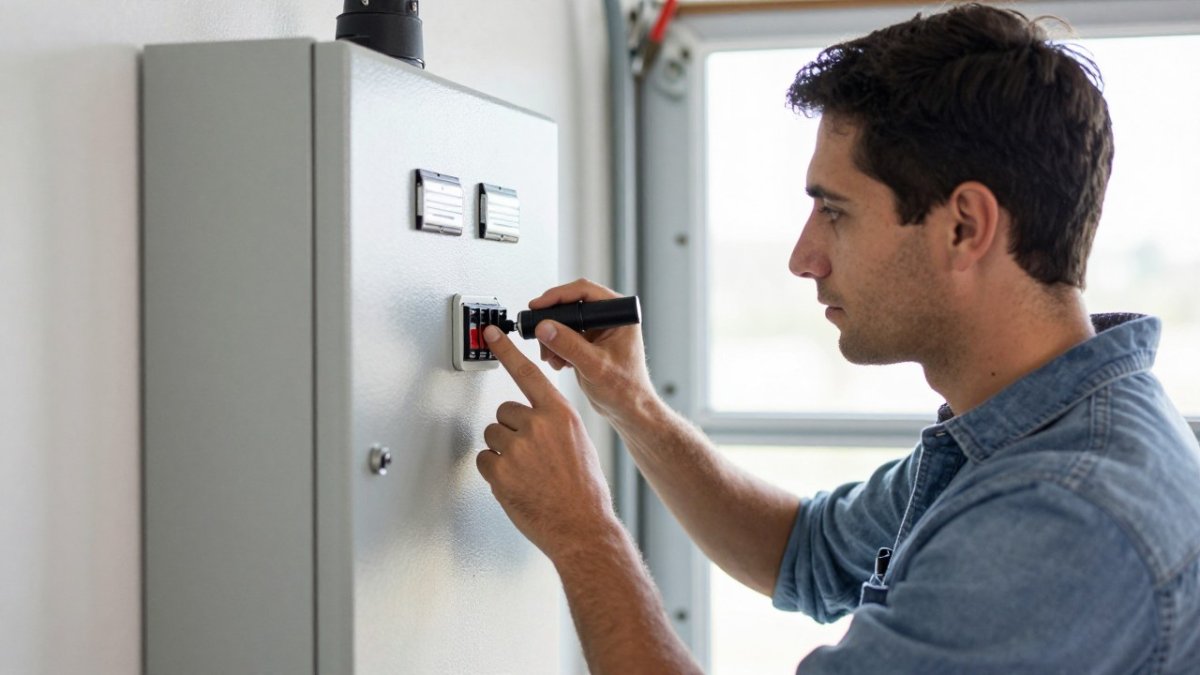
Watch out: never reset a breaker while standing on a wet floor or with wet hands, and never tape a breaker into the ON position to “fix” repeated tripping. That defeats the safety mechanism entirely. If you would rather follow a slower walkthrough with photos, our guide on how to reset a tripped circuit breaker safely covers the full process step by step.
A breaker that trips once is normal. A breaker that keeps tripping is telling you something specific, and the cause usually falls into one of four categories:
The distinction matters because the fix is different for each. Overloads are a usage problem. Shorts and ground faults are wiring problems that require an electrician to trace the fault with a meter. A worn breaker needs replacement. A breaker tripping in the same spot every few weeks can be an early sign of a wiring issue, and that is a good point to have the circuit inspected.
An electrical panel upgrade replaces an outdated service panel with one that matches your home’s actual electrical load. Modern homes run far more current than panels installed decades ago were designed to carry, and an undersized panel is a fire risk, not just an inconvenience.
These are the warning signs we see most often:
The honest answer to “is an upgrade really necessary?” is: sometimes no. If your panel is modern, has spare capacity, and shows no heat or tripping issues, you likely do not need one. If two or more signs above apply, an inspection will confirm it. Our article on signs your electrical panel needs replacement walks through seven warning signs in more detail, and if the inspection confirms the panel is at the end of its life, you can book a panel upgrade with our team.
The cost of an electrical service call depends on where the fault lives and what the repair involves.
Diagnostic or trip charge. This is the fee to show up, evaluate the problem, and identify the cause. It is sometimes waived if you approve the repair on the same visit.
Labor. Licensed electricians bill by the hour or by the job.
Materials. Breakers, wire, conduit, boxes, receptacles, switches, and fixtures vary widely.
Permits and inspection. Regulated work usually requires a permit from the local jurisdiction, and the fee is part of the job.
Code corrections and hidden conditions. Older homes frequently need related fixes before new work can pass inspection: missing junction box covers, ungrounded outlets, double-tapped breakers, or undersized wire.
Cleanup and disposal. Hauling away an old panel, fixture, or wire has a cost. It is small, but a bid that excludes it is not comparable to one that includes it.
What actually drives the final number, in rough order of impact:
When you compare estimates, put them side by side on the same five lines: scope in writing, materials specified by brand and model, labor included, permit and inspection responsibility, and warranty terms. A lower bid that omits the permit, excludes cleanup, or specifies builder-grade materials is not the same job. Ask each contractor to itemize labor and materials separately, state the permit responsibility in the proposal, and put the warranty in writing. A free estimate should give you a firm number and a written scope before any work begins, if it does not, that is the bid to set aside.
Hiring an electrician is a verification exercise. Licensing, insurance, permit handling, and a written scope are the four things to check when comparing contractors.
Verify the license, do not just ask for a number. Electrical licensing is regulated at the state level, and the state licensing body maintains a public lookup.
Confirm insurance with documents, not assurances. Ask for a certificate of insurance showing general liability coverage and workers’ compensation. If an uninsured worker is injured on your property, the exposure can land on you as the homeowner (Do I need to insure my household help?).
Ask who pulls the permit. Regulated work usually requires a permit from the local jurisdiction, and the work is inspected afterward.
Compare estimates on the same lines. Put every bid side by side on scope, materials, labor, permit responsibility, cleanup, and warranty.
Read the warranty terms. Ask what is covered, for how long, and whether labor is covered or only materials.
Check reviews for pattern, not just stars. Read recent reviews for the specific type of work you need, panel upgrades, EV chargers, and troubleshooting are different skills.
Use this checklist before you sign anything:
A common pattern is that the cheapest bid is the one with the most exclusions. For a broader look at what a full-service provider offers before you commit, review our residential electrical services.
Before you sign anything, verify these items rather than take a contractor’s word for them.
| What to check | How to verify | Why it matters |
|---|---|---|
| License | Look up the license number in the state licensing body’s public lookup | Confirms name, status, and expiration match the company |
| Insurance | Ask for a certificate of insurance; call the insurer to confirm | Covers general liability and workers’ compensation |
| Permit | Written confirmation the contractor pulls the permit in its name | Unpermitted work can complicate insurance claims and home sales |
| Estimate | Written, itemized scope, materials, timeline, and payment schedule | Verbal and text-message quotes are not comparable |
| Warranty | Get terms in writing, including whether labor is covered | A one-year labor warranty differs from 90-day materials-only |
| Reviews | Read recent reviews for your specific type of work | Panel upgrades, EV chargers, and troubleshooting are different skills |
A small electrical warning can grow into a serious failure over time, so it is worth having it looked at early. If your breaker keeps tripping, your panel is showing heat or age, or you are planning an EV charger or lighting project, get a licensed opinion before the problem grows.
308 Solutions Group brings over 45 years of experience to residential and commercial properties across the Dallas-Fort Worth area. We offer free estimates, competitive pricing, and 24/7 emergency support, and we handle everything from panel upgrades and lighting installation to generator and EV charger work under one roof. You can contact us to request your free estimate and get a clear, itemized answer on what your home actually needs.
Electrical problems rarely fix themselves, and the ones that seem to disappear usually come back larger. Get a licensed electrician to look at it now, while it is still a small job.
Pricing depends on the job type, parts, and how long the work takes. A simple service call costs less than a panel upgrade or EV charger installation. 308 Solutions Group has pricing information on its website and offers free estimates, so you can request a quote before work starts. Ask for a written quote that separates labor from materials to avoid surprise charges.
Call a licensed electrician if the breaker trips again right after you reset it, if you smell burning, see scorch marks, or notice sparks. Those signs point to a wiring fault or an overloaded circuit that a reset cannot fix. If the same breaker trips more than twice in a month, schedule an electrical inspection to find the cause.
Common signs include a panel with fuses instead of breakers, rust or moisture inside the box, frequent breaker trips, or a service rating below 200 amps in a home with modern appliances. If you are adding an EV charger, hot tub, or generator, an electrician can confirm whether your panel has the capacity to handle the extra load.
Ask for the license number and proof of insurance, whether permits are included, and who handles inspection sign-off. Request a written estimate that lists parts and labor separately. Confirm the warranty on workmanship and parts, and ask for recent local job references. A reputable electrician answers these questions without hesitation.
Electrical & Plumbing Licenses:
TECL: 33332 - TSBPE: M-40316
